
Wartime Fashion Innovations
World War II transformed fashion into a game of creativity and resourcefulness. With strict regulations on fabric use, inventive pattern cutting emerged. Designers had to work within limits, producing garments that were both practical and chic.
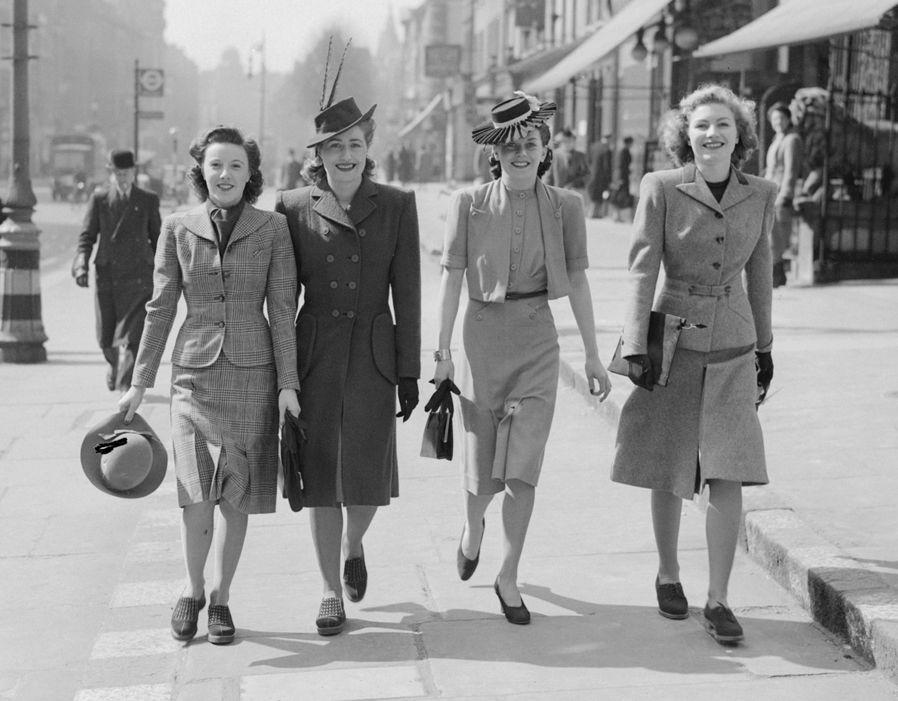
Utility clothing, bearing the official CC41 label, became the unsung hero of wartime fashion. These garments embodied simplicity with an air of elegance. Picture a fitted skirt suit with padded shoulders, or peplums adding structure without excess fabric.
The scarcity of traditional materials led to innovative use of alternatives like parachute silk for knickers or dresses. Draping and gores showcased masterful use of limited resources, allowing dresses to flow beautifully.
Home sewers became champions, transforming old garments into fresh looks. The “make do and mend” ethos saw 1930s dresses resurfacing with new vigor, swapping shoulders or pinching waistlines.
Accessories played a crucial role. A hat could redefine an outfit, while a bright scarf or bold snood added personality. Even stockings got a thrifty twist with drawn-on seams.
Women’s roles expanded beyond fashion, as they worked in factories and fields, often sporting trousers and headscarves—an empowering shift in traditional femininity. Hollywood glamorized this utility look, making it desirable even after the war.
The blend of elegance and utility that emerged from wartime constraints continues to inspire fashion today.
Iconic 1940s Style Elements
The 1940s saw fashion evolve, shaped by wartime necessity and resilience. Military aesthetics influenced street style, with sharp, defined shoulders becoming a hallmark of the decade. This brought a newfound strength to women’s wardrobes, echoing authority while maintaining elegance.
The ‘Victory suit’ embodied the era’s resourcefulness. With its nipped-in waist and broad shoulders, it balanced utility and sophistication, conserving fabric while striking a chord between military structure and feminine silhouettes.
A-line skirts and shirtwaist dresses enhanced the fashion vocabulary. Skirts adopted a gentle flair, resting just below the knee, while shirtwaist dresses balanced practicality with style, suitable for various occasions.
Fabric innovation brought new textures and finishes to garments. Despite austerity, fashion dared to be expressive through color and pattern.
These elements, born from challenge, have echoed through decades. The confident shoulders, practical skirts, and innovative use of materials continue to inspire modern collections, celebrating an era that united elegance and functionality.
Post-War Fashion Evolution
As the world emerged from World War II, fashion experienced a renaissance. The end of rationing allowed for a more indulgent expression of style, redefining elegance and luxury.
Christian Dior’s 1947 “New Look” collection revitalized the industry with a bold emphasis on femininity. It showcased:
- Nipped-in waists
- Full skirts
- Luxurious fabrics
This collection symbolized both a rejection of austerity and a celebration of beauty, influencing designers worldwide.
The post-war period saw innovation in textile production, enhancing the richness of available fabrics. Velvet and silk became emblematic of this era’s return to luxury, while new synthetic fabrics experimented with form and function.
This pivotal time fused past inspiration with forward-thinking design. Dresses became more elaborate with intricate patterns and embellishments, celebrating both revival and reinvention.
The transformation from wartime pragmatism to post-war glamour continues to influence designers today, reminding us of fashion’s power to reflect and inspire societal shifts.
Contemporary Thrift and Vintage Trends
Today’s fashion enthusiasts are looking back to the 1940s for inspiration, embracing thrifting and vintage shopping. This trend allows for a blend of timeless 1940s appeal with contemporary tastes, while being economical and environmentally friendly.
Thrift and vintage shopping offer unique opportunities to find pieces that echo 1940s modesty and sophistication. A-line skirts, swing dresses, and broad-shouldered jackets can be paired with modern items for a casual chic look.
Accessories from the era, like hats, brooches, and gloves, can be sourced second-hand, offering elegant ways to punctuate any outfit. Each vintage piece holds a story, inviting wearers to continue its legacy.
This approach to fashion promotes sustainability, reducing carbon footprints and offering an eco-conscious alternative to mass production. It allows individuals to express their unique style without breaking the bank, combining the aesthetics of a bygone era with today’s commitment to sustainability and individuality.
In an age where authenticity is celebrated, thrifters can embody the essence of the 1940s while reimagining its styles into something uniquely theirs. The result is a personal fashion story that pays homage to a decade marked by resilience and creativity.
Fashion from the 1940s offers a lesson in resilience and creativity, showing us that style is as much about adaptation as it is about aesthetics. The enduring influence of this era reminds us that fashion can tell powerful stories, weaving together history and innovation into every piece we wear.
- Miguel M. 1940s Fashion: A Decade of Resilience and Style. Fashion History Journal. 2020;45(2):112-128.
- Johnson K. Utility Clothing and the CC41 Label in Britain. Dress History Review. 2018;32(1):45-62.
- Smith A. The Impact of Christian Dior’s New Look on Post-War Fashion. Fashion Studies Quarterly. 2019;24(3):301-315.