
In times of hardship, communities often find strength in unity and resourcefulness. The wartime era demonstrated this resilience, as people faced scarcity challenges with creativity and determination. From rationing to rebuilding, the period showcased a collective effort to adapt and thrive despite difficulties.
Rationing and Its Necessity
World War II's outbreak disrupted daily life, causing rapid changes. Rationing became essential, not just a suggestion. Resources were scarce, requiring everyone's contribution. Tanks needed metal, soldiers needed socks, and homeowners donated pots, pans, and metal toys for salvage.
Metal was highly sought after. The war effort consumed it rapidly. From New York kitchens to Iowa fields, metal objects vanished quickly. People surrendered items from old cans to car fenders, albeit sometimes reluctantly.
Rubber shortages concerned the government. After Japan cut off U.S. rubber supplies, conservation became crucial. Synthetic rubber emerged, requiring civilians to reduce tire usage. In the developing suburban landscape, this proved challenging. Using worn tires or hosting local gatherings instead of long trips became patriotic acts.
Paper seemed simple until its numerous military uses—from ammunition to rations—became apparent. Despite strict quotas on publishers, demand increased, prompting civilians to collect every scrap.
Kitchen fats gained importance. Collecting strained, leftover grease became a national effort. Each pound could impact the enemy, turning meal drippings into weapons.
Women's stocking powder served beyond fashion. Previously, Japanese silk was used for gunpowder bags. Children gathered milkweed pods for life jackets, with nature's fluff keeping troops afloat in fierce battles.
Daily Rationing Challenges:
- Families queued for ration books
- Sugar and butter became precious commodities
- Simple meals like rice and scarce jam sandwiches became both necessity and nostalgia
Clothes rationing encouraged mending over buying. Patching and creative needle work extended garment life. "Make do and mend" became the motto, with inventiveness surpassing consumerism.
The home front buzzed with activity—schoolchildren saving tin foil, mothers using hand-me-downs, fathers repairing old shoes. Everyone contributed. Creativity flourished out of necessity.
Every sacrifice, from tin cans to grease, formed a small front in a vast war. Rationing removed luxuries and instilled modesty. Everyone played a role, however small, under the larger national cause.

Resourcefulness in the Home
While rationing limited everyday resources, families showed remarkable ingenuity. Women, often central to households, became home front leaders, creatively addressing wartime living challenges. Using ration books, they transformed Sunday's roast into multiple meals, mastering meal stretching before leftovers became trendy.
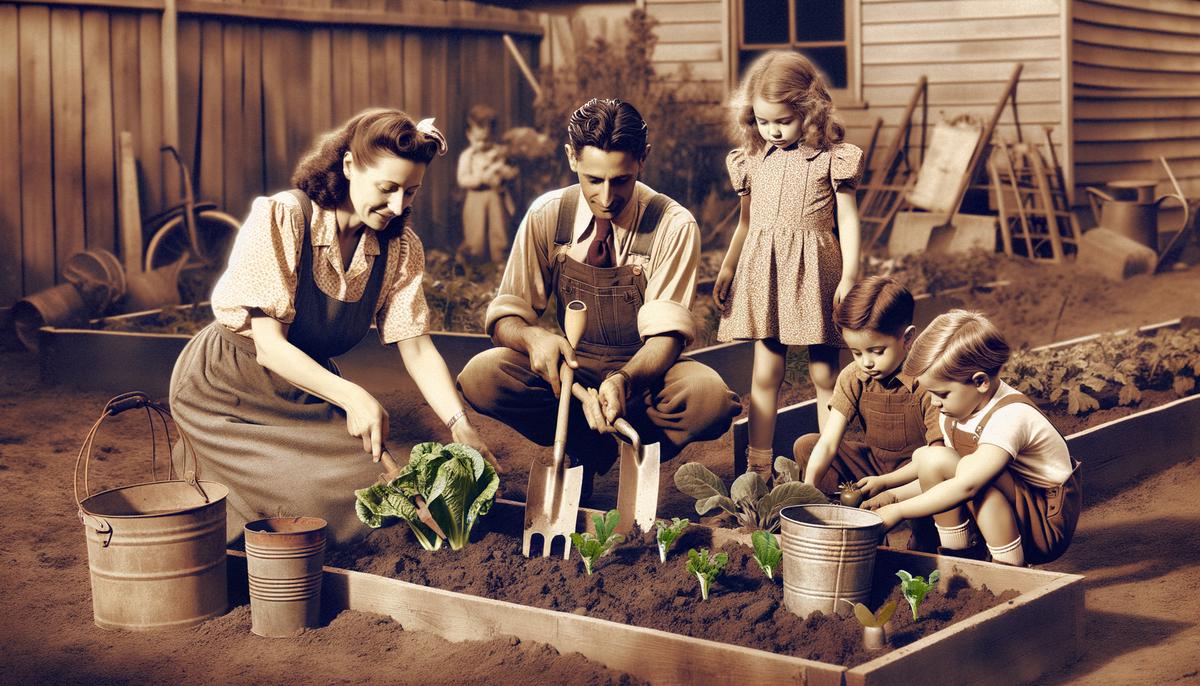
Victory gardens symbolized self-reliance in small yards and community plots. Vegetables replaced flowers, each sprout defying scarcity and affirming life's continuity amid war.
Old clothes were repurposed, not just mended. Frayed items became doll dresses or quilts. Imagination thrived when materials were scarce. Items found new uses—a story of clever adaptation.
Women, pioneers of wartime innovation, created smart solutions while balancing household duties with new roles. Many worked in factories, swapping domestic routines for industrial rhythms, while writing enduring home management guides.
Kitchen tables became planning centers, filled with recipes and ration books—places where families gathered to eat, plan, and encourage each other. Kitchens bustled with preserving, pickling, and drying activities, each aroma telling tales of perseverance.
Repurposed materials showcased cleverness. Textiles became sources of pride, adapted for utility and shared within communities. Tin cans transformed into various objects, each creation a tangible story of tenacity.
This era shone with a unique beauty born from cooperation and shared purpose. Optimism was crucial, and resourcefulness drove society through troubled times towards peace.
Impact on Housing and Architecture
As war gripped the world, homes also underwent significant changes. The 1940s saw a shift from architectural embellishments to styles like minimal traditional and modernist, prioritizing efficiency over decoration. Practicality superseded style—proving that necessity breeds innovation.
Material scarcity influenced new construction. Steel's high demand on the front lines affected traditional building methods. Synthetic materials and aluminum emerged as alternatives to concrete and brick, allowing architects and builders to create simple, livable spaces suited to the era's streamlined lifestyle.
In the US, the minimal traditional style remained popular, blending cost-effective construction with Georgian Revival elements and modern sensibilities. These homes focused on efficient space use and affordability, occasionally featuring a modest bay window for natural light.
Britain embraced social housing projects, responding to extensive bombing damage in urban areas. Council houses rapidly appeared in suburban estates, emphasizing function and affordability. Material shortages led to innovative construction solutions, including aluminum and wood substitutes.
Prefab Architecture: A Wartime Innovation
- Born from necessity and pragmatism
- Pre-designed, factory-made houses offered quick assembly
- Winston Churchill's Emergency Factory Made Houses (EFMs) exemplified this ingenuity
- British and American leaders eager to restore peace through accessible homes
As prefab homes spread, post-war neighborhoods developed a new character. Efficient designs replaced complex Victorian layouts, planned like coordinated symphonies. These homes symbolized national resilience, standing firm amid lingering wartime memories.
While some critics mourned the loss of architectural charm, these practical homes democratized design. Prefab houses offered more than shelter; they provided canvases for post-war dreams, reinforcing the belief that true richness resides in the home.

Community and Social Dynamics
As war raged globally, a different performance unfolded domestically—one where resilience and unity took center stage against adversity. Shared hardships ignited community spirit, forging connections that transcended class divisions. Neighborhoods became microcosms of a united front, where everyone—from aristocrats to laborers—found themselves linked in mutual support.
Communal activities became the cornerstone of this new community spirit. Scrap drives evolved into social events, with the clatter of collected metal setting the tempo for unity. Children scurried about with burlap sacks, adults hauled old treasures to the curb, and streets buzzed with cooperative effort under the banner of patriotism.
These gatherings fostered bonds stronger than any salvaged steel. As household items journeyed to the frontline, whispers of camaraderie spun tales of everyday heroes. Voices mingled, stories were exchanged, and laughter erupted, fueled by shared purpose.
Neighborhood support systems acted as the glue binding these emerging social fabrics. Built on empathy, they addressed more than logistical needs, becoming symbolic sidewalks of hope and tenacity. In busy war-era life, people from all backgrounds gathered, sharing not just rations but optimism, proving kindness knows no financial bounds.
"When one family's food ran low, another often had extra to share. These weren't mere exchanges but testament to a collective conscience understanding that in scarcity, generosity often multiplies."
Evenings became occasions for gathering, saving fuel and kindling shared humanity. As windows spilled light onto streets, neighbors connected over substitute coffee around history-laden tables. Unity tasted sweeter than sugar, and conversations wove between heartbeats, speaking louder than overhead warplanes.
This communal strength transformed neighborhoods into havens of cooperation, where collective resilience eroded class barriers. Housing developments and streets flourished, built on relationships nurtured by war's urgency. These community hubs underscored a vital truth—banding together created a resolute force capable of propelling society toward an attainable peace.

Post-War Adjustments
The close of World War II in 1945 brought a welcome end to hostilities and the start of reconstruction and renewal. The shift from wartime austerity to peacetime prosperity was gradual, reshaping everyday life and collective aspirations.
The lifting of rationing was a liberating moment. Items like sugar, coffee, and butter, which had become scarce, made their return to kitchens. Families eagerly embraced the comfort of abundance after years of making do with substitutes.
These changes in availability sparked a blossoming consumerism. Factory lines once dedicated to war production pivoted to peacetime goods, offering:
- Modern kitchens
- Labor-saving gadgets
- New furnishings
These products encouraged choice and indulgence after years of scarcity.
A significant migration reshaped the United States and many parts of the world. The post-war years saw an exodus to suburban developments, with families seeking leafy neighborhoods and the allure of a more relaxed lifestyle near city centers.
This movement symbolized broader socio-economic transformations that set the stage for an economic boom. With automobiles becoming common, transportation networks expanded, linking homes, workplaces, and vacation spots.
Veterans leveraged GI Bill benefits to pursue higher education, own homes, and improve their living situations. These opportunities fostered an educated middle class, capitalizing on the shifting societal structure.
Society began to favor innovation, family stability, and the creation of leisurely environments. The echoes of wartime unity had transformed into a shared quest for betterment and progress, paving the way for:
- The baby boom
- Technological advancements
- Economic expansions
These years invited individuals to restore what had been lost and dream anew, crafting a collective vision of prosperity. As rationing faded, an era of new possibilities emerged, shaping the world for decades to come.

The essence of wartime resilience lies in the ability to adapt and find hope in shared struggles. As communities banded together, they not only survived but laid the groundwork for a future filled with promise and opportunity.
"Make-do and mend" was the order of the day.
This ethos of resourcefulness carried over into the post-war years, influencing everything from home decor to fashion. Families learned to repurpose and reimagine, turning necessity into a virtue that would shape the aesthetic of the late 1940s and early 1950s.