
Origins of Rosie the Riveter
In 1942, with World War II raging, the U.S. needed a new workforce at home while men were at the battlefront. Rosie the Riveter emerged as a symbol of the many women stepping into factories.
J. Howard Miller's "We Can Do It!" poster, created for Westinghouse, showed a woman with a red polka-dot bandana, ready to work on assembly lines. Though not explicitly named "Rosie," it's often associated with her today.
Norman Rockwell's 1943 Saturday Evening Post cover depicted a strong woman with a rivet gun and lunch, her foot on a copy of "Mein Kampf." This image gave Rosie a name and face.
Rosie became a symbol of female empowerment, representing women taking on tough industrial jobs. Despite their contributions, many women were expected to return to domestic roles after the war. However, Rosie's impact on gender equality endured.

Women's Roles in WWII
During World War II, women took on diverse roles that challenged societal norms. Beyond Rosie the Riveter, there was Wendy the Welder, who worked in shipyards, piecing together enormous steel vessels.
Government Girls managed crucial paperwork, keeping the war effort organized. Their contributions in offices were as vital as those on factory floors.
- Women served as nurses, both at home and on battlefields, earning decorations for valor and bravery.
- The Women's Land Army saw women trading aprons for dungarees to work on farms, ensuring the nation was fed.
Though many women were encouraged to return to domestic life after the war, their impact was lasting. They had proven their capabilities in various fields, setting the stage for future advancements in workplace equality.

Challenges Faced by Women Workers
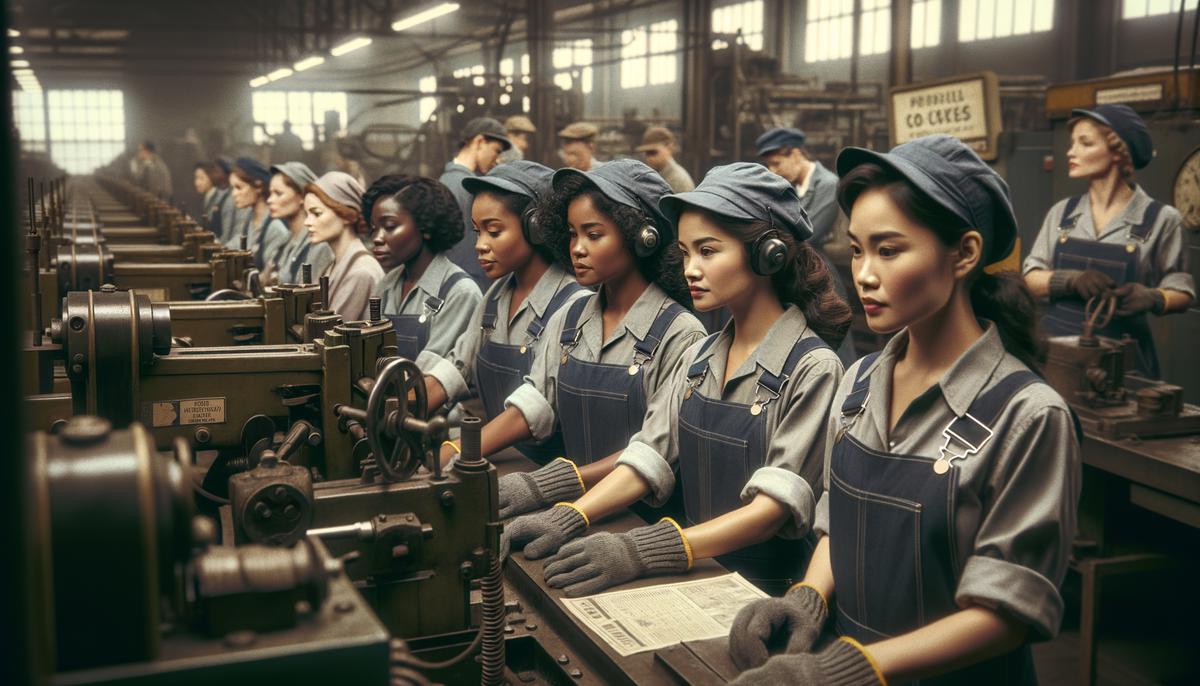
Women workers during World War II faced significant challenges:
- Discrimination and skepticism about their abilities
- Additional hurdles for women of color due to racism
- Safety concerns in factories with dangerous equipment
- Ill-fitting safety gear
- Adaptation to new work attire, swapping skirts for coveralls
Despite these obstacles, women persevered, showing remarkable adaptability and determination. Their efforts not only contributed to the war effort but also paved the way for future generations of working women.
Post-War Impact on Women's Employment
As the war ended, many women were expected to return to traditional roles, making way for returning servicemen. However, the impact of their wartime contributions couldn't be erased.
Some women welcomed the return to pre-war life, while others found it difficult to give up their newfound independence. The workforce had changed, and businesses began to recognize the value women brought to various roles.
"It's a Woman's War Too!" – Wartime slogan encouraging women's participation
More women entered nontraditional jobs than before the war, particularly in clerical and administrative positions. The "Government Girls" who came to Washington D.C. during the war often found more permanent roles.
Society's view of women's capabilities had shifted. Advertisers began catering to the "modern" woman, and women's magazines celebrated achievements in various fields.
While many inequities remained, the war had opened doors that couldn't be fully closed. The experience of wartime work had planted seeds of change, challenging traditional gender roles and inspiring future generations to pursue broader opportunities.

Rosie the Riveter's legacy is a testament to the strength and resilience of women who stepped up during World War II. Their contributions shaped the war effort and laid the groundwork for future generations, challenging societal norms and expanding the horizons of what women could achieve. The spirit of "We Can Do It" continues to inspire, reminding us of the enduring impact of courage and determination.
- Evans R, Loeb JJ. Rosie the Riveter. 1942.
- Rockwell N. Rosie the Riveter. Saturday Evening Post. May 29, 1943.
- Miller JH. We Can Do It! Westinghouse Electric & Manufacturing Company. 1943.
- U.S. Department of Labor. American Women in World War II. 1945.