
The Rise of Big Bands
The 1940s saw a boom in big bands that could liven up any dance hall. Benny Goodman, the "King of Swing," had a talent for bringing together brass, woodwinds, and percussion to create something special. With hits like "Sing, Sing, Sing," he made jazz a household favorite. Glenn Miller's orchestra also made waves with gems like "In the Mood" that captivated listeners.
The radio became a hub for these bands, drawing in audiences ready to fill their homes with vibrant music. Tuning into a live broadcast was often an event—a chance to escape daily life and get lost in swinging melodies. People gathered around the radio, dancing when space allowed, or simply swaying along with the rhythm.
Live performances were equally powerful. Venues like New York's Savoy Ballroom bustled with folks jitterbugging and Lindy Hopping. These gigs were full of energy, with bands playing their hearts out and fans responding enthusiastically.
The rise of big bands happened against a backdrop of societal changes, including the war effort. Many found comfort in these lively tunes, while others perhaps found love on the dance floor. Big band music became more than just songs; they were anthems of an era, reminding everyone how vibrant life could be even in challenging times.

Iconic Crooners of the Era
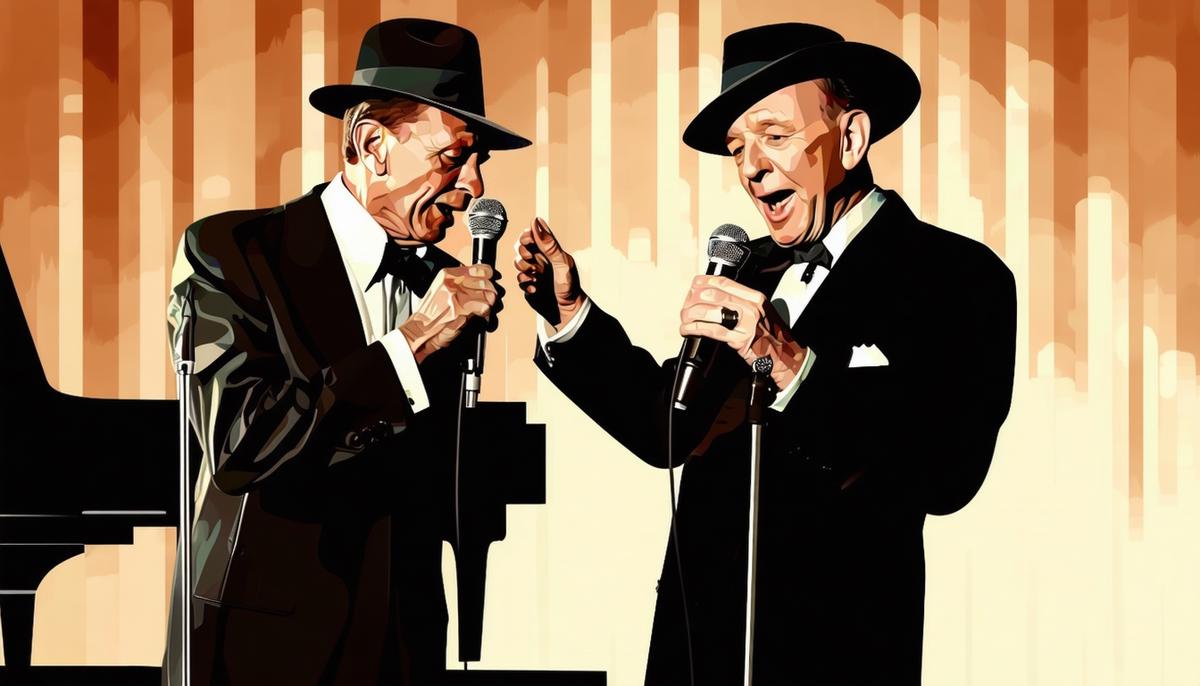
Frank Sinatra and Bing Crosby were two giants of the crooning world who seemed to have a knack for serenading an entire nation. Their voices were warm and comforting, offering solace during the tumultuous 1940s.
Sinatra, originally part of the Tommy Dorsey Orchestra, made a bold move to go solo. His cool, silky voice found its way into homes across America through songs like "I'll Never Smile Again" and "In the Wee Small Hours of the Morning." Sinatra wasn't just about singing; he embodied a mood of longing and hope, becoming a symbol for soldiers overseas who tuned in for a taste of home.
Bing Crosby, the laid-back crooner, seemed to take on life with just the right mix of ease and depth. Whether you were listening to "White Christmas" or "Swinging on a Star," Crosby's voice was like a comforting guide pointing towards happier days. He mastered the microphone, coloring each phrase with sincerity. His music became the soundtrack of the era, providing comfort after a hard day's work or serving as gentle lullabies during uncertain times.
Both Sinatra and Crosby shaped popular culture beyond their music. Sinatra's charisma influenced fashion and lifestyle, while Bing's relaxed persona showed that elegance could be effortless. Together, these crooners bridged gaps, lifted spirits, and brought music so deeply into homes that it felt essential. They offered more than just tunes—they provided solace and joy, becoming pillars of sound in the grand symphony of the 1940s.
Impact of World War II on Music
World War II deeply influenced the music scene, affecting the themes and styles of both big bands and crooners. Musicians and songwriters used their art to uplift spirits and foster hope during uncertain times.
Big bands, with their upbeat tempos and vigorous swing, became a powerful force for boosting morale. Songs like "Pistol Packin' Mama" and "Boogie Woogie Bugle Boy" channeled the energy needed to persevere, turning music halls and ballrooms into havens of escape.
Crooners delivered the emotional undercurrents that resonated with listeners. Songs like Vera Lynn's "We'll Meet Again" spoke deeply to families separated by war, offering promises of reunion and cherished memories. The sincerity in these tunes etched them into the hearts of listeners, becoming woven into the essence of wartime sentiments.
The war also expanded music's reach through USO shows, where performers entertained troops near and far. Musicians became ambassadors of positivity, fostering a shared humanity in the face of adversity. In radio broadcasts, soldiers overseas clung to the voices of Sinatra, Crosby, and other beloved artists as reminders of home.
Music during World War II was more than entertainment; it became a tool to soothe and support. Musicians composed the backdrop of courage and sentimentality that powered an era marked by global struggle, creating a legacy that outshone the shadows of war.

Transition to Post-War Music
As the 1940s drew to a close and the effects of World War II began to fade, the music world found itself on the brink of change. The giants of the big band era and beloved crooners who had comforted a nation through tough times were gradually giving way to new sounds.
Big bands faced challenges maintaining large ensembles in a post-war world focused on conserving resources. Many musicians sought smaller gigs or turned to new innovations to captivate audiences without the logistical challenges of a full band.
Radio began signaling shifts too. By the late 1940s, listeners were tuning into emerging genres that offered fresh sounds. A rising passion for rhythm and blues, coupled with the spirit of jitterbug and early rock and roll, began to captivate younger audiences.
Crooners like Frank Sinatra and Bing Crosby adapted to the changing landscape. Sinatra, ever versatile, took on a more modern crooning style in the early 1950s, smoothly riding the emerging waves of popular music while maintaining his classic appeal.
As new genres emerged, pioneers like Chuck Berry and Little Richard brought novelty and energy. The birth of rhythm and blues, offering a blend of emotion-laden vocals and spirited tempos, began to outshine conventional crooning. The electrifying beats of rock and roll were soon to follow, especially appealing to youth.
This transition marked a broader cultural evolution. Music became the anthem of dreams and aspirations for a new generation. Smaller ensembles and soloists took center stage, thriving in clubs and on new formats like 45 RPM records, changing how music was consumed.
As the echoes of the big band era softened into nostalgic memory, and crooners adjusted their notes, a diverse and vibrant soundtrack of the post-war era unfolded. This reshaping of the musical landscape mirrored a society eager to embrace modernity while carrying the affectionate whispers of melodies past.

The lasting influence of big bands and crooners remains undeniable. They offered more than just music; they provided a soundtrack to resilience and hope. Their legacy reminds us that even in challenging times, music can uplift and unite.