
Film noir emerged as a cinematic reflection of the 1940s, capturing the essence of a world grappling with profound change. This genre combined visual artistry with intricate storylines, resonating deeply with audiences of the time. Its distinctive style and thematic depth offered a mirror to society’s struggles, inviting viewers into a shadowy dance of intrigue and introspection.
Origins and Influences
The 1940s gave rise to film noir, blending American grit with European artistry. The genre’s roots lie in:
- American crime dramas
- French poetic realism
- German Expressionist cinema
These elements combined to create a genre that resonated with wartime audiences, grappling with their own fears and uncertainties.
Film noir managed to offer a mirror to society’s anxieties. The stoic detectives and doomed romances weren’t just characters; they were reflections of a post-war world trying to make sense of chaos and confusion. Visual style blended with narrative depth, creating a dance of shadows and suspense that captivated viewers.
These influences converged amidst a backdrop of social upheaval, painting stories as murky as the times themselves. The result was cinematic tales of intrigue and introspection that pulled audiences right into the mystery. The creative fusion of these distinct roots allowed film noir to capture the zeitgeist of the era in a way few others could, creating the perfect storm of style and substance that cemented its lasting legacy.

Key Characteristics
Film noir is known for its distinctive visual and thematic appeal. Picture this: moody, low-key lighting casting long shadows, mirroring the moral ambiguities the characters grapple with. It’s as if every scene was filmed at twilight, rendering the world in endless shades of gray—a fitting metaphor for the uncertain times.
Moral ambiguity is at the heart of film noir. Characters maneuver through a landscape where right and wrong blur into a perplexing moral gray zone. The dichotomy between the hero and the villain is unsettlingly twisted. Everyone is a bit tainted in film noir; redemption is rare, and innocence often appears as a fleeting mirage.
The quintessential characters of film noir include:
- The femme fatale: embodying seductive danger, weaving webs as complex as the plot twists
- The cynical detective: cloaked in skepticism and a trench coat, with a weary gaze that has seen too much and trusts too little
This mix of dark aesthetics and complex characters didn’t merely entertain—it captivated. Audiences of the 1940s found in film noir a canvas painted with the era’s unrelenting tension and unpredictable change. It delved into the shadows of the human psyche and revealed an intricate dance where moral dilemmas, existential queries, and emotional depth intermingled, making it a lasting favorite in cinematic history.
Cultural Context
The 1940s emerged as a decade of profound transformation, marked by the tremors of war and the fragile hope of post-war reconstruction. In this environment of flux and uncertainty, film noir found fertile ground, speaking to the collective existential crisis that simmered just beneath the surface of polite society.
The end of World War II brought not only victory but profound social upheaval:
- Stalwart norms were challenged as women, who had filled roles left vacant by men during the war, began to demand their place.
- Returning soldiers faced an internal war of adjustment, carrying with them a world-weary cynicism.
The film noir’s enigmatic femme fatale embodied these emerging vibrations of female agency and power. Her character, both alluring and dangerous, floated through these stories as an emblem of change.
In a post-war society grappling with codes of vanished certainties, film noir recreated the period’s search for authenticity amidst moral chaos. These films depicted a gritty reality that was both disconcerting and captivating, mirroring societal struggles and individual quests for identity and justice. Film noir offered a unique blend of reflection and escape, articulating the complexities of a generation traversing the twilight of certainty and the dawn of ambiguity.
Impact on Crime Genre
Film noir forged a fresh path for crime dramas, stepping beyond archetypes to set a new standard. The gritty realism and moral ambiguity central to noir stories acted as a beacon for subsequent filmmakers, guiding them in crafting tales that probed deeper into the human psyche than ever before.
Film noir transformed the crime genre by weaving intricate portrayals of flawed characters, each lurking somewhere between shadow and light. This departure from straightforward morality redefined the essence of crime storytelling, compelling audiences to reckon with a reality fraught with ambiguity.
The influence of film noir extended into stylistic areas:
- Innovative use of lighting, with its penchant for stark contrasts
- Creation of suspense and tension through visual techniques
- Introduction of complex narratives and morally ambiguous characters
These techniques would go on to imbue neo-noir with a sense of homage and modernization, as seen in films like Chinatown and Blade Runner.
From the sultry jazz-infused scores to the voice-overs that let moviegoers into the minds of haunted protagonists, film noir’s contributions pervade the cinematic world. It laid the foundation for future noir iterations and diversified the crime genre as a whole, ushering in subgenres that have flourished in creativity and exploration.
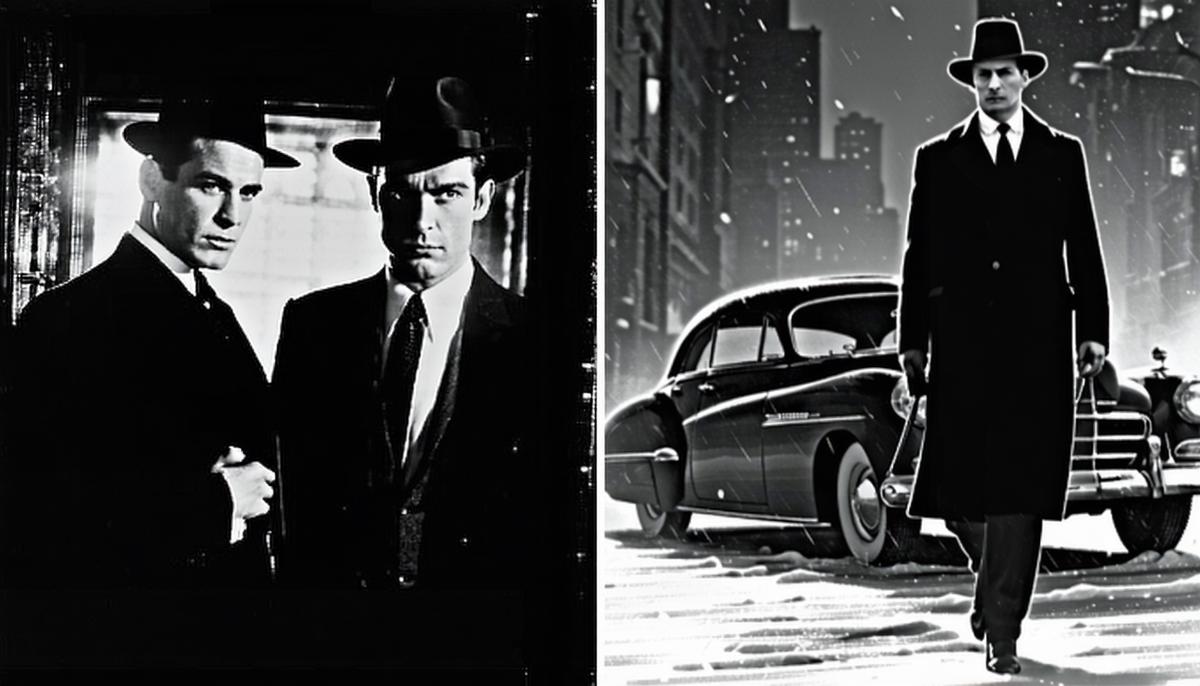
Film noir’s legacy lies in its ability to capture the intricate dance of moral ambiguity and human complexity. It left an indelible mark on cinema, influencing crime dramas and shaping storytelling for generations. This genre’s enduring appeal is a testament to its power to reflect and challenge the human experience, reminding us that within every shadow lies a story waiting to be told.
- Frank N. A New Kind of Police Drama: The Criminal Adventure. L’écran français. 1946;61:8-9.
- Schrader P. Notes on Film Noir. Film Comment. 1972;8(1):8-13.
- Naremore J. More Than Night: Film Noir in Its Contexts. Berkeley: University of California Press; 1998.