
1. Hats
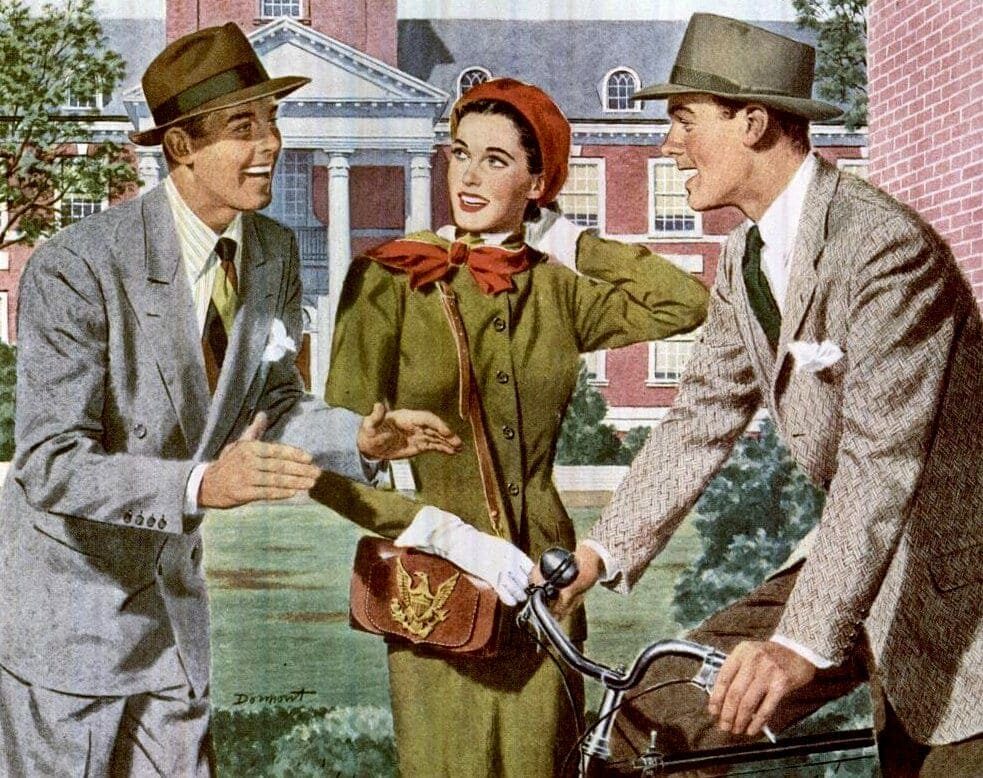
Hats were the crown jewels of 1940s fashion. A woman’s ensemble often began at the top—a hat. These accessories weren’t merely about keeping one’s head warm; they were expressions of style and personality. Hats ranged from petite, veiled designs to grand, wide-brimmed offerings. Decorative elements like feathers, flowers, and ribbons added flair and whimsy, giving even the most practical outfit a dose of elegance.
The diversity in styles was impressive:
- Fascinators
- Turbans
- Fedoras
Each hat had the power to transform an ordinary outfit into a statement piece, leaving a lasting impression.
2. Gloves
In the 1940s, gloves were more than just hand coverings—they were a symbol of sophistication. Whether crocheted or crafted from soft kid leather, gloves were as much about aesthetics as they were about comfort. Women often matched their gloves with their dresses, hats, or purses, yet avoided today’s head-to-toe matchy-matchy fashion faux pas.
The colors were rich and varied, with navy, tan, brown, and black being favorites. For those unafraid of attention, shades of dark red or pink added a vibrant pop. Glove length might vary, from wrist to elbow, allowing every outfit to have its perfect pair.
Evening gloves in jewel tones added flair to ballgowns. Fingerless gloves made it possible for women to retain elegance without sacrificing dexterity for dinner or dancing. Every pair was a declaration of style—an accessory that made its presence known with understated grace.

3. Handbags
Handbags in the 1940s balanced chic style and practicality. In an era of “make do and mend,” these bags became a canvas of creativity. Wartime material shortages prompted a shift to alternate fabrics, with animal skins such as goatskin, alligator, and snakeskin stepping in. These materials delivered durability and a hint of exotic allure.
While maintaining an air of compact elegance, handbags grew slightly larger to accommodate more essentials. A frame bag or a woven wicker grocery basket offered affordable yet stylish daytime options, symbolizing the era’s balance between frugality and flair.

The understated elegance of the 1940s handbag lay in its ability to adapt. Whether accompanying an evening gown or a casual day outfit, a handbag lent a polished finish that anchored the ensemble together. Each handbag carried more than personal belongings—it carried stories, secrets, and a slice of history.
4. Scarves
Scarves in the 1940s were versatile, serving as both fashion accessories and everyday tools. They evolved from utilitarian beginnings into vibrant symbols of style, blending practicality with panache.
Early in the decade, scarves provided:
- Warmth
- Coverage for between-parlor hair
- Color to neutral outfits
Peasant floral prints in shades of red, blue, green, and brown became popular motifs, enlivening mundane days. These scarves also shielded hair from dust, wind, and work.
As post-war optimism grew, scarves adopted bolder, larger prints in richer hues, transitioning back to neckwear. A silk or rayon piece might flow elegantly around the neck or adorn a pocketbook. In winter, wool and cotton blends provided warmth, while knitting patterns revealed charming mother-and-daughter sets.
English brand Jacqmar introduced propaganda scarves, featuring motifs saluting the Armed Forces and patriotic slogans—a perfect union of fashion and function. The scarf was the unseen thread binding 1940s fashion—a silent partner adding a signature twist to any ensemble.

5. Belts
Belts in the 1940s were crucial in defining silhouettes, particularly as women’s fashion shifted to structured shapes post-war. These belts cinched waists and highlighted a woman’s form with subtle sophistication. Initially, belts were unassuming due to wartime rationing, often crafted from leftover dress fabric with simple buckles.
As material shortages eased, belts underwent a transformation. Women gravitated towards styles that were both functional and expressive. Belt widths expanded, and designers experimented with textures and patterns. Materials like velvet, leather, and handmade knits created contrasting colors and bold statements.
Belts added a modern twist to dresses, coats, and skirts—effortlessly complementing other accessories for a cohesive look. By the end of the decade, belts had become prominent accessories, with wider designs and more elaborate styles. They embodied the transformational spirit of the era, marking the waistline with elegance and innovation.

6. Jewelry
1940s jewelry was a canvas of expression, reflecting boldness and creativity without relying on costly materials. Costume jewelry took center stage, offering stylish accessibility for women looking to add glamor to their everyday ensembles.
Popular jewelry items included:
- Brooches: Adorning lapels and necklines with intricate designs, often featuring floral motifs and colorful gemstones.
- Pearls: Favoring double-strand necklaces and chokers, often accompanied by large, ornate clasps or dazzling brooches as centerpieces.
- Earrings: Larger-than-life designs, often clip-on, featuring contrasting shapes and faux diamonds or gemstones in vibrant colors.
- Rings and Bracelets: Embracing boldness with elongated designs and glass stones in various colors.
Wide cuff bracelets and tennis bracelets made simple yet intricate statements, harmonizing with the diverse fashion expressions of the 1940s. This jewelry defied wartime frugality, substituting scarcity with creativity. Like the women who wore them, these pieces were crafted to dazzle, spark conversations, and inspire charm in the face of adversity.
7. Stockings
Nylon stockings were the finishing touch that elevated 1940s outfits. As war efforts redirected nylon production, these coveted items became scarce. Despite this, stockings remained integral to women’s wardrobes, offering a polished look that was both refined and alluring.
Women’s resourcefulness shone through shortages. Some drew lines along the back of their calves to mimic stocking seams. When nylons returned post-war, women flocked to department stores, eager for the genuine article.
"Stockings were more than just fabric; they were symbols of femininity enduring the trials of the time. Each pair represented tenacity, style, and the vintage ingenuity that defined this extraordinary decade."
In 1940s fashion, accessories were statements of resilience and elegance. Each piece, from hats to stockings, told tales of creativity and adaptability in a changing world. These accessories did more than complement outfits—they embodied the spirit of a generation determined to face challenges with grace and style.
- Ewing E. History of 20th Century Fashion. London: Batsford; 2001.
- Mendes V, de la Haye A. Fashion Since 1900. London: Thames & Hudson; 2010.
- Walford J. Forties Fashion: From Siren Suits to the New Look. London: Thames & Hudson; 2008.