
Impact of WWII on Childhood
Growing up in the 1940s meant living in a world heavily influenced by World War II. Children found themselves taking on adult responsibilities, from collecting newspapers for recycling into war supplies to selling war bonds. Some even worked on farms due to labor shortages, a stark contrast to today's childhood experiences.
Air raid drills interrupted school days, sending students ducking under desks. The radio brought news of global unrest, mixing with comic books and classroom discussions. War stories influenced education, with lessons including how to identify enemy aircraft or understanding blackout procedures.
Despite the war's challenges, children's resilience shone through. They found joy amidst scarcity, strengthening community bonds. Their unique role as young contributors to the war effort is a significant chapter in history, embodied in poster boards and victory gardens.
"Well, when we were at school, we had to practice what they called air raid drills. A siren would sound, and we would have to crouch under our desks and wait until we heard the all-clear."

Play and Imagination
In the 1940s, play became more than simple leisure. It was an outlet for imagination and a temporary escape from wartime anxieties. Children played impromptu games of "Germans and Americans," turning sidewalks into vast terrains and bedsheets into forts.
Scarcity sparked ingenuity. Kids made:
- Dolls from socks
- Miniature cars carved from wood
- Games from bottle caps
This spirit of innovation shaped their understanding of the world, teaching them that imagination could overcome limitations.
Engaging games like kick-the-can and hide-and-seek tested children's skills and fostered friendships. The contrast with today's pre-made play experiences is striking. While modern kids enjoy abundant leisure activities, the spontaneous exploration found in 1940s play fostered unique resourcefulness and creativity.
There's a special charm in knowing that despite war and scarcity, children of the 1940s found joy in simple things—a stick, a story, a friend. Their play built resilience and imaginative thinking useful for life's future challenges.

Media and Cultural Influences
Media played a crucial role in shaping young minds in the 1940s. The family radio was a gateway to compelling dramas, news updates, and rich storytelling. Popular shows like "The Lone Ranger" or "Superman" offered stories of heroism that encouraged resilience and valor.
Newspapers and comic strips introduced more serious discussions, translating complex concepts into allegorical tales. Movie newsreels at Saturday matinees brought images to life, showing both warfront action and home-front events.
This media consumption offered glimpses into the lives of people far away, placing children's own daily struggles in context. It shaped a generation that, despite youthful innocence, was acutely aware of its role in a larger story. The mix of absorbing stories and real-world understanding created lasting memories that continue to resonate across lifetimes.
Social Dynamics and Playmates
Childhood play in the 1940s served as a great equalizer, bringing together children from various backgrounds. Neighborhood streets acted as junctions where diverse children met, forming friendships that often crossed social and economic lines.
Structured games provided frameworks for building alliances and encouraging teamwork. Popular games included:
- Red Rover
- Tag
- Hide-and-seek
- Hopscotch
Winter snowfalls or summer breaks inspired new, imaginative adventures, uniting children under shared stories.
The community significantly shaped these interactions. With parents knowing neighbors and children often eating at one another's homes, connections extended beyond playdates. This closeness created a trusting environment for children.
The diverse mix of children playing together sparked cultural exchanges. Kids absorbed diverse customs and practices, broadening their horizons without realizing it. These playground exposures laid the foundation for developing critical social fluency.
Through these basic games and interactions, lifelong friendships formed, etiquette was intuitively learned, and collective empathy developed—ensuring that the playmates of that era became conscientious neighbors, coworkers, and leaders of the future.
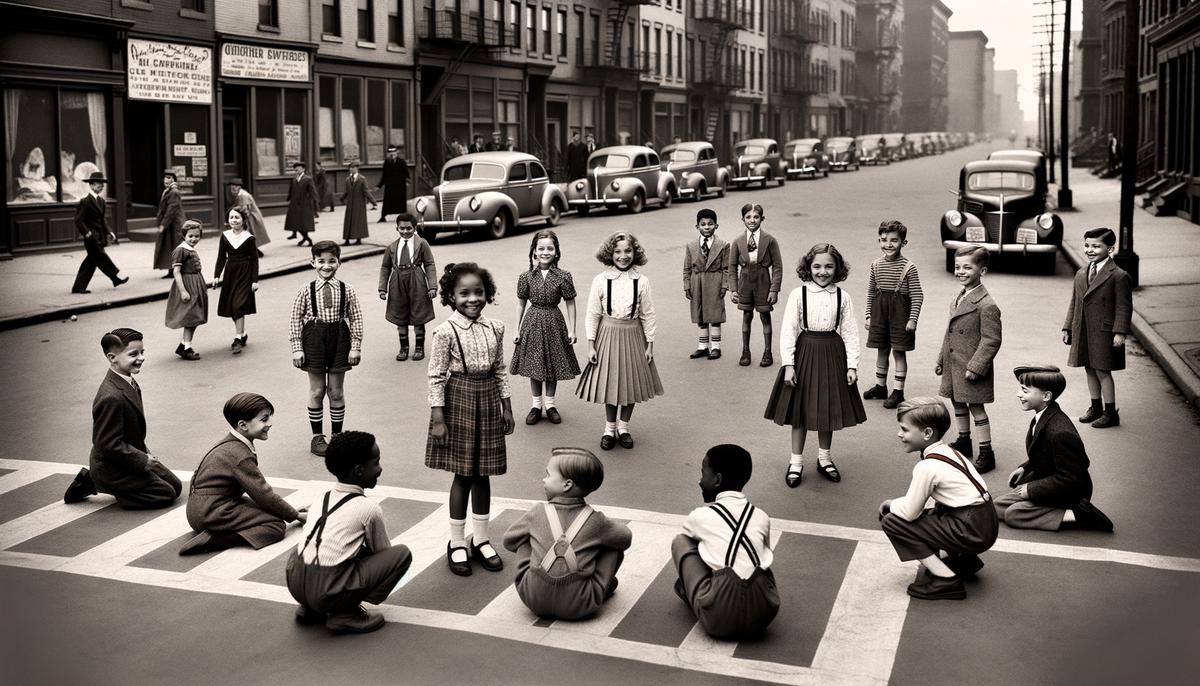
Reflecting on the resilience and creativity of children during the 1940s, it's clear that even amid challenges, they found ways to thrive. Their ability to find joy in simplicity and their resourcefulness offer timeless lessons in optimism and community spirit.
1. James A, Jenks C, Prout A. Theorizing Childhood. Cambridge: Polity Press; 1998. 2. Mayall B. Towards a Sociology for Childhood: Thinking from Children's Lives. Buckingham: Open University Press; 2002. 3. Prout A, James A. A New Paradigm for the Sociology of Childhood? Provenance, Promise and Problems. In: James A, Prout A, eds. Constructing and Reconstructing Childhood: Contemporary Issues in the Sociological Study of Childhood. London: Falmer Press; 2008:7-33. 4. Cunningham H. Children and Childhood in Western Society Since 1500. Harlow: Pearson Education; 2000.