
Barbecue has long been a cherished tradition in America, blending flavors and cultures. From its humble beginnings in the Caribbean to its establishment as a staple of American gatherings, barbecue tells a story of adaptation and community. This culinary journey reflects the rich diversity and shared experiences that define American identity.
Origins of American BBQ
BBQ's roots trace back to the Caribbean, where Spanish explorers encountered the Taino tribe's "barbacoa" method of slow-cooking meat over indirect heat. This technique made its way to the American South, where it was significantly shaped by African American slaves. They introduced slow-and-low cooking techniques using green wood, which tenderized tough cuts of pork and infused them with a smoky flavor.
Pork became the centerpiece of Southern BBQ due to its abundance and affordability. European settlers added their own touches, like vinegar from the British and mustard from the Germans and French. Regional styles emerged, each with its own distinct flavors:
- North Carolina: Vinegar-based sauce
- South Carolina: Mustard-based sauce
- Texas: Beef-centric, influenced by cattle culture
- Memphis: Sweet, tomato-based sauce
- Kansas City: Variety of meats with a sweet and spicy sauce
This evolution from barbacoa to barbecue reflects a fusion of cultures and innovations, transforming it into a symbol of community gatherings and shared experiences.

1940s BBQ Boom
The 1940s saw a BBQ boom driven by post-war prosperity and suburban growth. As families settled into new homes with spacious backyards, BBQ became the perfect way to celebrate togetherness and the American dream.
Industrial innovations played a key role. In 1948, H.J. Heinz introduced the first nationally distributed barbecue sauce, making regional flavors accessible across the country. This allowed backyard chefs to experiment with tastes from far-flung locales.
BBQ also reflected changing social dynamics. While women's roles were expanding beyond the home, grilling remained largely a masculine domain. Family cookouts became symbols of post-war optimism and stability, offering a sensory spectacle of flames, sizzling meat, and enticing aromas.
The 1940s BBQ boom embodied the American spirit of the time – resourceful, resilient, and ready to embrace life's joys. As families gathered around grills, they weren't just cooking food; they were savoring a slice of peace in a newly hopeful world.
Regional BBQ Styles
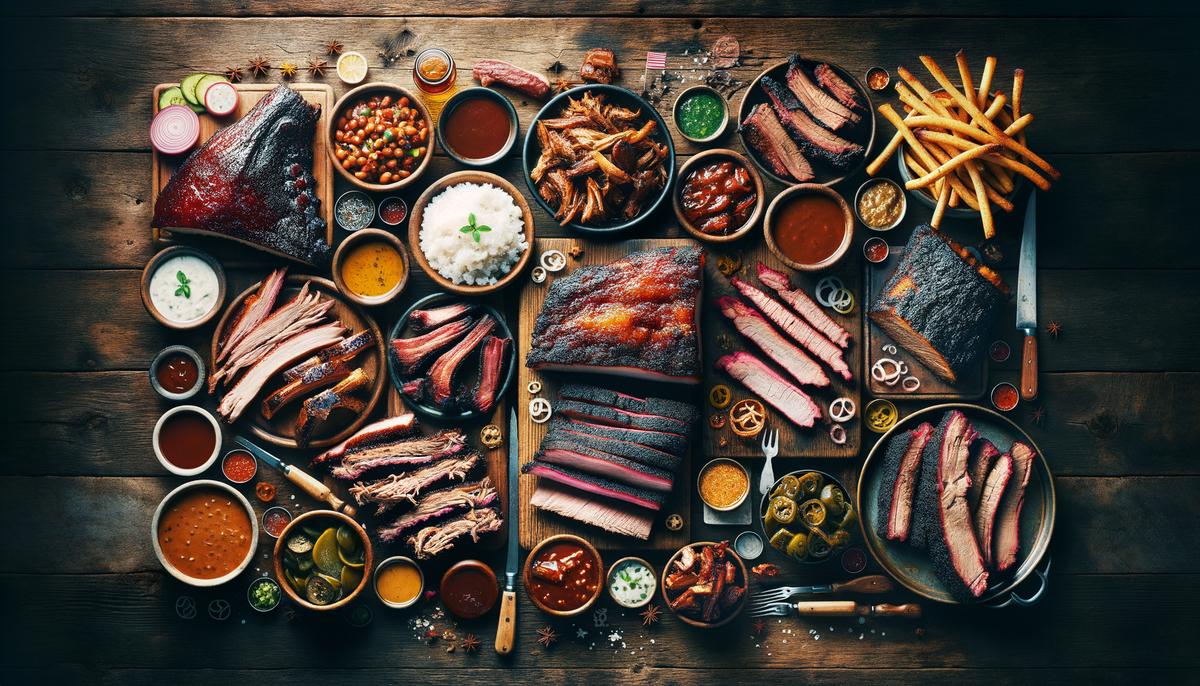
American BBQ is a diverse blend of regional styles, each shaped by local culture and immigrant influences:
- Carolinas: Influenced by British colonists, North Carolina favors whole hog cookery with vinegar-based sauces. South Carolina features mustard-based sauces, reflecting French and German settler tastes.
- Texas: Beef brisket dominates, influenced by German and Czech immigrants. The focus is on smoke and spice, letting the meat's flavor shine through.
- Memphis: Known for sweet, tomato-based sauces and dry rubs on ribs and pulled pork. The city's trade hub status provided access to molasses and other sweeteners.
- Kansas City: A BBQ melting pot, featuring various meats with sauces that blend sweet, spicy, and smoky flavors. This style evolved from Henry Perry's Memphis roots.
These regional styles aren't just about ingredients or methods; they reflect the stories of immigrants, settlers, chefs, and families. Each bite of BBQ offers a taste of American history and the cultural mosaic that makes it unique.
BBQ and American Identity
In the 1940s, BBQ became more than just a meal; it evolved into a symbol of American identity. Post-war backyard gatherings centered around the grill, with Dad often taking center stage as the family's provider and grill master. These scenes reinforced traditional gender roles while also celebrating unity and prosperity.
BBQ's rise reflected national pride and resilience. Like a culinary melting pot, it symbolized the varied cultural influences that make up American identity. Gatherings around the grill became celebrations of community and optimism for the future.
However, BBQ's story also mirrored complex racial dynamics. Despite its roots in African and African American culinary traditions, mainstream accounts often overlooked these contributions. Nevertheless, the rich legacy of African American barbecuing remained an integral part of BBQ culture.
The 1940s barbecue phenomenon embodied the complexities of post-war America – a delicious emblem of national pride, evolving social dynamics, and the ongoing quest for unity amidst diversity.

Barbecue stands as a flavorful testament to America's spirit of resilience and unity. It captures the essence of cultural fusion and shared history, offering a delicious reminder of the connections that bring people together. With every bite, barbecue continues to celebrate the diverse influences that shape American life.
- Matthews KL. One Nation Over Coals: Cold War Nationalism and the Barbecue. American Studies. 2009;50(3/4):5-34.
- Griffith D. Celebrating Barbecue: The Ultimate Guide to America's 4 Regional Styles of 'Cue. Simon and Schuster; 2002.
- Villas J. The Glory of Southern Cooking. Houghton Mifflin Harcourt; 2007.