
The period following World War II marked a transformative time in American history, where economic growth and social change reshaped the landscape of the nation. As industries shifted from wartime production to consumer goods, the American Dream took on new dimensions, offering both opportunities and challenges.
Post-War Economic Boom
The conclusion of World War II launched significant changes across the American landscape, paving the way for what many consider the golden era of the American Dream. Industrial productivity soared, fueling an economic expansion that transformed the United States into an industrial powerhouse. Manufacturing plants that once produced weapons now created everyday consumer goods. Homes that were once simple subdivisions became symbols of prosperity and success.
In this post-war period, consumption became a new national pastime. The American middle class grew rapidly, aided by public policies like the G.I. Bill. Veterans were able to afford homes and pursue higher education, creating a ripple effect that further bolstered the economy. Suburbia, with its rows of similar homes, white picket fences, and manicured lawns, represented newfound stability and a brighter future.
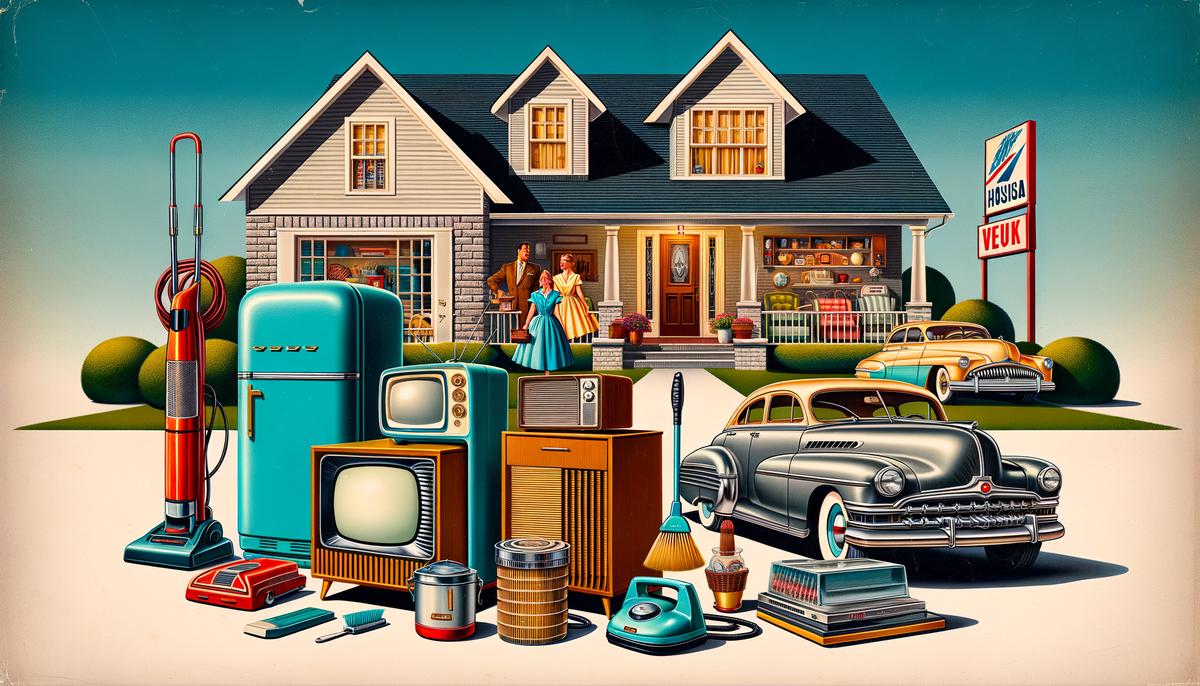
For many, this era of plentiful jobs and robust consumer confidence offered a taste of what James Truslow Adams might have envisioned when he coined the term "American Dream." People aspired to own homes filled with modern conveniences—from cars and dishwashers to television sets and lawnmowers. Families gathered around living room radios, and later televisions, celebrating the lifestyle their hard work and the booming market promised.
However, this post-war economic boom was not inclusive. While many benefited from new prosperity, large segments of society remained marginalized. African Americans, women, and other minority groups faced barriers as they tried to access the same benefits. Housing policies often excluded people of color, maintaining an uneven social landscape beneath the glossy surface. Unions, initially strengthened by wartime production needs, soon found their influence waning in the face of anti-communist sentiment.
Yet, within these limitations, the seeds of social change were planted. Unseen in the excitement over new appliances and station wagons, resilient undercurrents carried the calls for civil rights and equality into the following decades. The apparent sameness of suburban life, coupled with economic disparities, often sparked the desire for greater freedom and opportunity. The dream was to live in a "land in which life should be better and richer and fuller for everyone," as Adams had envisioned.
While the stage appeared set for shared prosperity, the post-World War II American Dream became a story of both incredible growth and intrinsic challenges that begged acknowledgment and resolution. Despite the uneven terrain, the idea itself remains potent, reshaping with each generation's hopes and disappointments.

The G.I. Bill and Suburbanization
The G.I. Bill opened doors to unparalleled opportunities in education and home ownership for countless veterans. After the profound sacrifices made during the war, the bill became a symbol of gratitude and a tangible promise of a better tomorrow. Veterans could now afford to pursue a college education and buy a home, key steps towards achieving middle-class status.
On university campuses, former soldiers traded helmets for textbooks, exploring professions they might never have considered before. This surge in education led to increased earning potential, a crucial ingredient in the recipe for the American Dream. For those using Veterans Administration loans, owning a house with a yard and room for kids suddenly felt within reach.
Levittown, with its rows of planned homes, became the answer to housing the influx of postwar families. These mass-produced suburban communities spurred a migration from city centers to neat suburban streets, all in pursuit of that vision of prosperity wrapped up in a brand-new kitchen and a lush green lawn.
However, this suburban dream had its complications. The creators of Levittown, like many other suburban developments, sold homes exclusively to white families. African Americans found themselves blocked by discriminatory lending practices and racially restrictive covenants that kept their dream homes out of reach. It was a clear reminder of the systemic inequities that persisted even as the nation celebrated its progress.
Gender dynamics further illustrated the discrepancies in the suburban dream. Women, who had entered the workforce in large numbers during the war, often found themselves returning to domestic roles once the conflict ended. Suburbia became synonymous with family life, yet it often limited women to roles that underutilized their wartime experience and potential.
These social divides didn't go unnoticed. Even as some families settled into their newly minted homes, others looked in from the fringes, dreaming of doors that might one day open. The irony was clear, marking a growing awareness that the American Dream, while tangible for some, required work still undone and promises yet unfulfilled. As suburbs sprawled, these undercurrents began weaving a new story, one in which the dream would, hopefully, become more inclusive.

Social Changes and Civil Rights
The end of World War II brought with it profound shifts in societal norms and expectations. This period became a testament to the enduring spirit and voices that rose to challenge the status quo, eager to redefine what the American Dream could mean for all citizens.
The war had brought women into the workforce in unprecedented numbers, with Rosie the Riveter becoming a symbol of empowerment. With men off to battle, women took on roles previously reserved for male workers, proving themselves capable in factories and offices alike. Yet, as soldiers returned, societal pressure urged women to return to domestic roles. However, the taste of independence lingered, contributing to the simmering tensions that would lead to the women's liberation movement.
Just as significant were the burgeoning movements for civil rights. African American soldiers returned with stories of service and sacrifice that transcended race, only to face segregation at home—a glaring inconsistency that became indefensible. This irony fueled efforts to dismantle institutional racism through boycotts, protests, and legal battles. The determined push against racial injustice laid the groundwork for the civil rights reforms of the 1960s.
The civil rights movement, led by steadfast activists, challenged and redefined what it meant to dream as an American. Leaders like Martin Luther King Jr. sought to reconcile America's ideals with its practices, fighting for inclusion and a new definition of success based on equality and justice. Their work aimed to ensure the American Dream stood as a beacon for all—a land where desegregation was not merely a mandate but a lived reality.
In this transformative landscape, the American Dream was simultaneously reborn, enriched by calls for civil justice and equality. As movements swelled and voices rose, the idea took on a deeper resonance, one that acknowledged the unfinished work of the nation. This redefinition was about more than just the acquisition of prosperity; it was about realizing an inclusive vision that embraced the diverse faces and stories woven into American society.
As sidewalk conversations about dreams and desires grew louder, as those who felt sidelined pressed for their place, a new American Dream began to take shape. It was no longer just a vision of white picket fences, but an aspiration buoyed by diversity, strong enough to weather the inevitable debates and dilemmas that would follow.

Cultural Shifts and Consumerism
As the post-war 1940s unfolded, America found itself embracing an era that promised prosperity and a reimagined set of social values underpinned by a growing consumer culture. The collective desire to leave behind wartime sacrifices and austerities drove a new wave of enthusiasm, with consumerism becoming the engine driving American dreams and desires.
Advertising emerged as both a mirror and a megaphone, reflecting aspirations while amplifying new ideals. Advertisers tapped into the pent-up demand and newfound purchasing power of the American public. Products became more than just objects of utility; they grew to embody notions of status, identity, and the attainment of the American Dream. The latest car model or a new household gadget promised not just convenience, but a step up the social ladder.
The media played a starring role in this story. Magazines and burgeoning television programming painted vivid pictures of idealized American life—a world where smiling families enjoyed a blend of modern convenience and traditional values. This depiction left many convinced that the path to happiness lay in possessing the next great thing, be it a dream kitchen or the latest fashion.
Advertising techniques showcased products and entwined them with dreams, achievements, and social standing. The notion that a better, fuller life was just a purchase away became embedded in the national consciousness. It was a vision that offered tangible rewards—a home outfitted with all the creature comforts, a car in the driveway, and a refrigerator stocked with the latest culinary delights.
However, as consumerism spread, it also nudged societal expectations into more complex forms. The drive to own went hand-in-hand with the pressure to keep up, lending a competitive edge to the pursuit of happiness. "Keeping up with the Joneses" became more than a witty expression; it was a testament to the new social order where success was measured by what you owned. As families embraced this new consumer lifestyle, their choices echoed through the social fabric, reshaping neighborhoods, communities, and American identity itself.
Yet, this swing of the cultural pendulum brought with it unintended consequences. The quest for material comfort sometimes obscured deeper social values. The American Dream, once freighted with the promise of equality and self-realization, occasionally found itself reduced to the pursuit of material wealth. And while for some this dream glittered as an attainable reality, for others it remained a shimmering promise never quite within reach.
The landscape of 1940s America, therefore, wasn't just marked by an industrial boom or suburban spread—it was characterized by a recalibration of values. The promises spun by consumerism were complex; they tapped into optimism while simultaneously sowing seeds of conformity and exclusion. Balancing this new cultural vista required a delicate approach, one that the nation would continue to pursue through the decades with ambitions that reached far beyond the horizon.
In the end, the post-war era was a time of great potential and significant hurdles. The American Dream expanded to include prosperity and the pursuit of equality and justice, setting the stage for future generations to redefine what it means to thrive in a diverse society.
- Adams JT. The Epic of America. Little, Brown, and Company; 1931.
- Truslow Adams J. The American Dream. The Atlantic Monthly. 1944;174(4):42-47.
- Reich R. The Lost Art of Democratic Narrative. The New Republic. 2005;232(11):16-19.
- Leonhardt D. The American Dream, Quantified at Last. The New York Times. December 8, 2016.
- Chetty R, Grusky D, Hell M, Hendren N, Manduca R, Narang J. The Fading American Dream: Trends in Absolute Income Mobility Since 1940. Science. 2017;356(6336):398-406.