
Emotional Impact of Wartime Letters
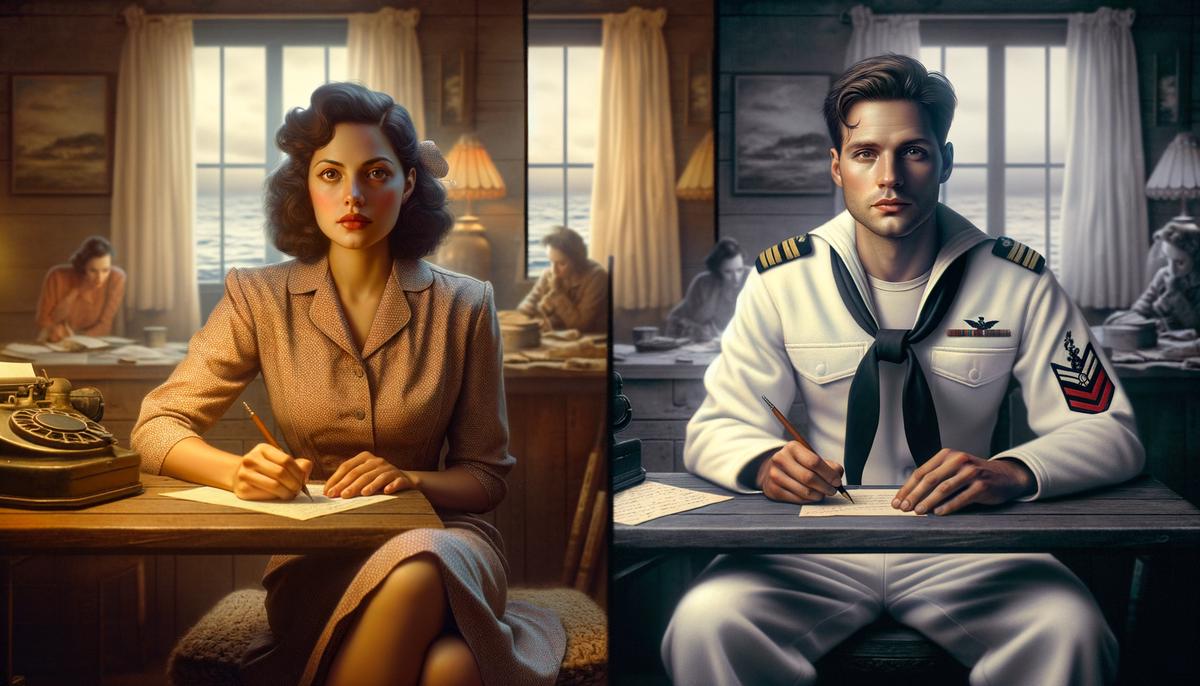
World War II separated soldiers from home, but handwritten letters became beacons of hope. Consider 2nd Lt. Sidney Diamond and his fiancée Estelle Spero. Their correspondence was funny, sweet, and sometimes lonesome, but pulsed with love. When Sidney wrote about wanting to marry Estelle, it was his way of holding onto their future amidst uncertainty.
Mail to and from the front lines was essential. Private Sid Phillips experienced this when he received his first letter on his 18th birthday. Soldiers clung to these letters, reading them repeatedly until the paper wore thin.
Family letters, too, carried immense significance. Staff Sgt. Eugene Lawton wrote home detailing his experiences on Normandy Beach. His accounts painted vivid pictures, allowing his family to see through his eyes. Such letters held historical value, offering a glimpse into significant moments in time.
Parents and siblings wrote lines infused with love and encouragement, even when news from the front was scarce. In Babe Ciarlo's letters home, you could sense his efforts to keep things light for his family, writing about chow time as if they were just having a regular day at the park.
John and Betty Meades, stationed apart in different countries, relied on letters to bridge the gap between them. John's gentle teasing in asking Betty not to get married on the sly was his way of saying, "I miss you," without getting too sentimental.
In a world governed by uncertainty, wartime letters were islands of stability. They were canvases painted with hopes, dreams, and sometimes heartbreak, transcending the bleakness of war. They weren't just letters; they were lifelines.

V-Mail and Communication Challenges
Getting letters to and from soldiers during World War II was a monumental task. The solution? V-Mail, short for Victory Mail, an inventive process to keep ocean lanes clear for more pressing cargo.
V-Mail miniaturized letters, capturing them as tiny thumbnail images on microfilm rolls. A single sack could carry thousands of these reels, lightening the load for ships and speeding up delivery times. At their destination, the microfilms were reprinted onto small sheets of photographic paper and sent to recipients.
This system wasn't just about logistics; it was about staying connected. Waiting for news could feel like an eternity, with traditional mail routes often delayed or disrupted. V-Mail ensured that treasured notes reached the battlefield more swiftly, offering comfort to soldiers who could otherwise feel isolated.
Of course, these messages were heavily scrutinized by military censors to prevent leaks about troop movements or sensitive plans. Some soldiers found ways to slip in sentiments between the lines, careful not to betray any secrets but keen to reassure their loved ones at home.
Through this clever adaptation, the resilience of the human spirit shone through. In those reduced but potent scraps, one could read the strength of bonds unbroken by separation, words ready to buoy spirits until they could meet again face-to-face.

Stories of Love and Resilience
Wartime correspondence reveals stories that fluctuate between the poignant and the profound. Richard and Jean Porritt, newlyweds separated by Richard's naval duties, exemplify how letters could weave a story of unwavering commitment. Richard eagerly awaited Jean's letters aboard the USS Tazewell, while Jean's words kept her connected to her husband back home. They shared dreams for the future, imagining a life filled with family and laughter.
John and Betty Meades' story spans borders, with John stationed near Hamburg. Their exchanges, rich with tenderness and longing, drew a vivid map of their journey through uncertain times. John's occasional playful jabs and Betty's thoughtful reassurances became a dance of affection, each step bridging the miles between them.
The bittersweet saga of Sidney Diamond and Estelle Spero punctuates these tales. Sidney's letters echoed longing and commitment, envisioning a future as tangible as the paper they touched. Tragically, their story ended with Sidney's life cut short by war. Despite this, their correspondence remains a testament to an enduring connection that even war's cruelties could not obliterate.
These stories show how letters transcend mere ink and paper, becoming vessels carrying hope and nurturing affection. Despite the thunderous backdrop of a world at war, these individuals showed us how the human heart can pen words that fortify and inspire.
Historical Significance of Wartime Letters
Wartime letters capture the pulse of history in a unique way. They provide a raw, unvarnished look into people's lives, threading personal accounts through the fabric of world history. Staff Sgt. Eugene Lawton's account of the Normandy invasion, for example, paints a vivid tableau of the emotional and psychological landscapes soldiers traversed.
Paul Fussell's careful missives home reveal the fragility of optimism amid adversity. His reflections on being wounded, though tempered to ease worries, give us a textured view of the daily uncertainties soldiers faced. These correspondences offer a multi-dimensional perspective on wartime reality.
Beyond individual stories, these letters provide a cultural snapshot, reflecting societal norms, values, and the vernacular of the era. They were repositories of not only personal sentiments but also broader cultural perceptions and hopes, often revealing the patriotic fervor and collective resilience that defined 1940s America.
Additionally, these letters enriched public discourse by humanizing history's epic chapters. They made grand strategies relatable through personal anecdotes, turning abstract geopolitical shifts into personal sagas of love, loss, and enduring faith.
In the archives of these wartime letters rests a trove of history — not just in their recounting of events, but in their embodiment of the human condition at a time when the world was being reshaped. While headlines painted broad strokes of the Second World War, these letters offered the fine brushwork necessary to paint the full picture.

Wartime letters, with their heartfelt words and vivid imagery, offer a poignant glimpse into the past. They remind us of the enduring connections forged amidst chaos, capturing moments of love and resilience that continue to resonate today.
- Fussell P. Wartime: Understanding and Behavior in the Second World War. Oxford University Press; 1989.
- McIntosh A. Rock County Star Herald. December 18, 1941.
- Phillips S. Personal correspondence. September 3, 1942.
- Sledge E. With the Old Breed: At Peleliu and Okinawa. Random House; 1981.
- Miller B. Personal correspondence. December 24, 1944.
- Ciarlo C. Personal correspondence. February 16, 1944.
- Aanenson Q. Personal correspondence. December 5, 1944.