
1. Casablanca (1942) – ‘Here’s looking at you, kid.’
Humphrey Bogart’s “Here’s looking at you, kid” in Casablanca is one of film’s most unforgettable lines. Spoken to Ingrid Bergman, it encapsulates a complicated love story set against World War II. Bogart’s delivery conveys layers of emotion, from affection to resignation, capturing the essence of Rick Blaine. It’s intimate yet elusive, offering a moment of vulnerability in a film rich with political intrigue and personal sacrifice.
This phrase distills their unsolvable romance into a single moment, making it timeless. Even as the world around them crumbles, this acknowledgment of their connection defies the chaos, adding a personal touch to an impossible situation. The line endures as an example of eloquent simplicity and emotional depth in cinematic storytelling.

2. Citizen Kane (1941) – ‘Rosebud.’
Citizen Kane is a journey through the fragmented memories and enigmatic life of Charles Foster Kane, portrayed by Orson Welles. The word “Rosebud” serves as an elusive cipher that pulls viewers into a story of intrigue, ambition, and regret. Welles’ storytelling weaves Kane’s rise and fall into a tale as grand as the man himself—against the backdrop of media empires and personal disillusionments.
This single word, uttered at Kane’s death, encapsulates the inconsistency of human memory and the intricacies of personal legacy. It invites audiences to decode not merely a word, but a human life shaped by the conflict between public persona and personal desires.
"Rosebud" resonates through generations because it amplifies the emotional landscape of the film, connecting with our own thoughts about identity and fulfillment.
The understated yet profound revelation underscores Citizen Kane’s timeless exploration of ambition, memory, and the simple things that truly anchor us. Its impact highlights the power of singular moments and objects in defining our lives and the universality of yearning for something—or someone—irrevocably lost.

3. Double Indemnity (1944) – The Crime Unfolds.
Double Indemnity stands as a prime example of film noir, embodying the genre’s elements through its depiction of desire and deceit. The scene where the crime unfolds invites audiences to the edge of their seats. Walter Neff, played by Fred MacMurray, is an insurance salesman ensnared by the alluring Phyllis Dietrichson, portrayed by Barbara Stanwyck. Their chemistry is a mix of attraction and ambition that leads them down a dangerous path.
As the crime plot unfolds, each move is calculated yet precarious. The murky atmosphere heightens the stakes as their plan teeters on unraveling. Director Billy Wilder and screenwriter Raymond Chandler explore the moral maze, blurring lines between right and wrong.
This scene isn’t just about murder; it’s an exploration of human nature. Greed, manipulation, and desperation are laid bare, inviting audiences to grapple with their own susceptibility to temptation. Wilder’s storytelling and the actors’ performances lend a sense of inevitability to the unfolding drama.
The scene is iconic for its intricacy and insight into the human psyche. It challenges viewers to contemplate the allure of forbidden desires and the consequences of crossing moral boundaries. Double Indemnity captures its era’s spirit while echoing timeless truths about human weakness. As the tension mounts and the story spirals to its climax, this scene remains a testament to film’s power to illuminate our inner shadows.

4. It’s a Wonderful Life (1946) – The Ending.
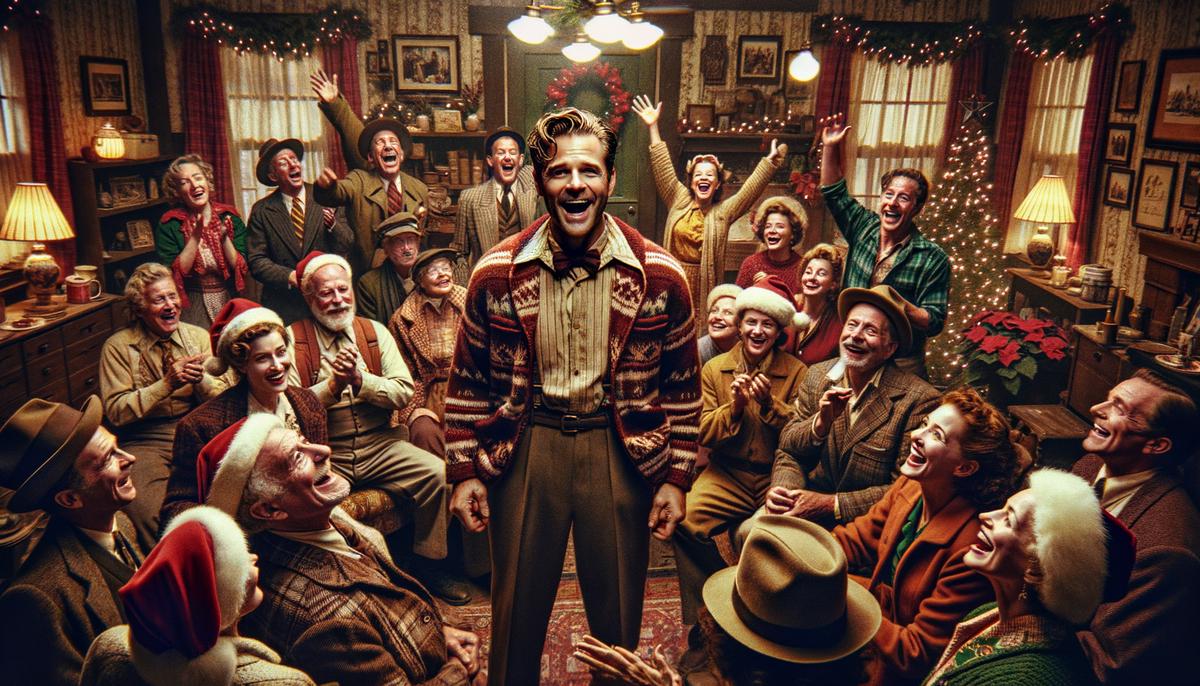
The ending of It’s a Wonderful Life (1946) stands out as a beacon of hope and affirmation. Frank Capra’s storytelling culminates in an emotional conclusion that touches viewers across generations. At its core, this finale shows George Bailey’s revelation of his life’s worth, as portrayed by James Stewart.
George faces the burdens of life in a small town—a series of sacrifices overshadowed by everyday pressures that leave him disillusioned and desperate. At this low point, the celestial intervention of Clarence the angel unfolds the film’s message.
George witnesses a world without his existence—a chilling glimpse that is both unsettling and enlightening. He sees the positive impact his presence had on Bedford Falls, contrasting sharply with the town’s decline in his absence. This vision reignites George’s appreciation for his life and connections.
The film reaches its peak as George joyfully returns to his timeline, eager to embrace life anew. The town’s citizens rally to affirm George’s importance, not just to them but to life itself. The uplifting “Auld Lang Syne” swells as currency piles up in the Bailey home, glowing with camaraderie and gratitude.
This scene resonates because of its simple yet universal truth: each person has the capacity to touch lives and create a legacy of kindness—often in ways unseen yet deeply significant. Capra weaves this lesson with cinematic grace, inviting us into a world where human value is celebrated.
It’s a Wonderful Life offers more than a holiday classic; it’s a reminder of human interconnectedness and the impressions we leave on each other. The movie’s closing moments remain a tender testament to life’s unheralded wonders—a call of inspiration that whispers, “No man is a failure who has friends.”
5. The Maltese Falcon (1941) – The Final Scene.
The Maltese Falcon (1941) stands as a classic of film noir, with its final scene embodying the genre’s allure. Humphrey Bogart, as detective Sam Spade, articulates the murky morality that defines this work. Director John Huston weaves a tale of deception and the pursuit of a fabled statuette.
In the closing scene, Sam Spade confronts Mary Astor’s character, Brigid O’Shaughnessy, highlighting themes of duplicity and betrayal. Brigid, caught in her own web of lies, pleads her case desperately. Spade meets her with steely resolve, delivering a monologue that ends their alliance. Bogart’s performance conveys a range of emotions through his icy gaze and measured delivery, balancing personal feelings with professional duty.
This interaction examines noir’s exploration of human frailty and ethical ambiguity. As Spade declares, “I won’t play the sap for you,” he embodies the hard-boiled detective—cynical yet principled. It’s a moment rich in moral complexity, questioning whether integrity can survive in a world of compromise.
The scene’s power lies in the chemistry between Bogart and Astor, both skillfully portraying the tension between romance and betrayal. Their exchange is taut with unspoken motives and deep emotions.
The Maltese Falcon’s final scene represents noir’s core elements. It illuminates the dance of yearning and deceit, inviting reflection on the boundaries of conscience. The movie closes on a note of resignation, with Spade’s poetic yet pragmatic acknowledgment of the “stuff that dreams are made of.” These words reinforce the film’s legacy, evoking desire’s clash with reality. By refusing neat resolutions, The Maltese Falcon affirms noir’s rich ambiguity, leaving a lasting impression.

6. The Third Man (1949) – The Ferris Wheel Scene.
The Third Man (1949) creates an unforgettable moment in its Ferris wheel scene, set in post-war Vienna. Directed by Carol Reed and starring Orson Welles, this scene delves into human ethics against a backdrop of conflict and corruption.
The enigmatic Harry Lime, played by Welles, meets Joseph Cotten’s Holly Martins in a Ferris wheel car. As they ascend, the physical rise mirrors a descent into moral ambiguity. The city’s quiet hum below contrasts with the tense dialogue above, creating an eerie atmosphere.
Lime delivers a chilling monologue that justifies his unethical actions. Surveying the people below as insignificant dots, he questions the value of individual lives. Welles’ delivery resonates as a warning about the dangers of detachment from humanity.
- In this confined space, Lime challenges both Martins and the audience to consider the ethical dilemmas of prioritizing profit over compassion.
- It’s a masterful moment that transcends film noir, inviting reflection on moral decay during societal upheaval.
Despite its dark theme, the scene has a certain elegance. The Ferris wheel’s circular motion symbolizes the recurring themes of betrayal and moral conflict in the story. Reed’s direction and Welles’ performance create a moment that’s both intellectually stimulating and visually striking.
This iconic scene captures the disillusionment of the post-war era, exploring ethical compromise in a way that remains relevant. It reminds us of the thin line between civilization and chaos, calling attention to the importance of our moral choices in everyday life.

7. The Treasure of the Sierra Madre (1948) – ‘We don’t need no stinkin’ badges.’
In The Treasure of the Sierra Madre (1948), a single line etched itself into pop culture: “We don’t need no stinkin’ badges.” This defiant retort, delivered by Alfonso Bedoya’s character Gold Hat, encapsulates the film’s themes of paranoia, betrayal, and raw survival instinct.
Director John Huston weaves a tale of avarice and desperation as Fred C. Dobbs (Humphrey Bogart) and his fellow fortune seekers embark on a quest for gold in the unforgiving terrains of Mexico. As greed erodes their camaraderie, the story unfolds into a vivid portrayal of suspicion and existential dread. Bedoya’s delivery of the line infuses a momentary irony into the tension, providing a sardonic glimpse into the distrust simmering beneath the surface.
The line’s resonance with audiences stems from its reflection of a deeper philosophical core—a rebellion against authority when survival and self-interest take precedence. It underscores the story’s descent into chaos and isolation, serving as a verbal emblem of the human condition when confronted with the stark realities of nature and ambition.
The Treasure of the Sierra Madre isn’t merely about the literal search for gold; it’s a cinematic exploration of the virtues and vices that define us. The line “We don’t need no stinkin’ badges” distills the film’s existential quandary into a singular, potent refrain, challenging us to reflect on the boundaries of morality and the ultimate cost of unchecked greed.
8. Notorious (1946) – The Long Kiss.
Alfred Hitchcock's Notorious (1946) elegantly intertwines romance and espionage, culminating in the famous "Long Kiss" scene. This moment not only flirts with the boundaries of on-screen intimacy but subverts them with Hitchcock's characteristic flair.
Starring Ingrid Bergman and Cary Grant, their chemistry ignites the screen with an intensity that drives the story forward. At the time, the Production Code Administration limited kisses to three seconds, a guideline Hitchcock cleverly circumvented by crafting an extended sequence that blended passion and dialogue. The camera hovers over Bergman and Grant, creating an illusion of continuity in their embrace as they move, talk, and share tender kisses.
Beyond its romantic veneer, the "Long Kiss" explores the intricacies of trust, duplicity, and longing. Bergman's character, Alicia, must infiltrate a Nazi syndicate, a task complicated by her love for Grant's Devlin, a fellow spy. As they navigate the blurred lines between duty and desire, every caress becomes charged with tension—reflecting the peril they face and the emotions simmering beneath their polished exteriors.
Hitchcock's playful defiance of the censors showcases his ability to transform limitations into creative opportunities. The sequence triumphs not merely through its romantic allure but also through its rich narrative subtext, imbuing the film with depth that lingers. It artfully lays bare the characters' vulnerabilities, balancing emotional complexity with visual sophistication.
The "Long Kiss" endures as a shimmering gem in Hitchcock's filmography, illustrating cinema's power to transcend temporal limitations and communicate universal truths. By entwining romance with suspense, Notorious invites audiences to experience a love that is furtive yet fervently realized amidst intrigue and tension—a delicate portrayal that resonates with the enduring elegance of 1940s cinema.
9. Bambi (1942) – Bambi’s Mother’s Death.
Among Bambi's (1942) most poignant scenes is the heartbreaking death of Bambi's mother—a cinematic moment that has seared itself into cultural consciousness, challenging audiences with its raw depiction of innocence lost.
Set against a beautifully animated forest backdrop, this pivotal scene shatters tranquility with a stark reminder of nature's unforgiving side. As Bambi frolics through the forest, shielded by his mother's nurturing presence, her sudden loss marks an abrupt transition, casting a shadow over what was once an idyllic world.
What makes this scene resonate so profoundly is its understated approach. We never witness the fatal blow; instead, director David Hand uses atmosphere and sound to devastating effect. The haunting silence following the gunshot allows viewers to fill the emotional void with their grief and empathy.
Bambi's distressed search for his mother mirrors the confusion and vulnerability felt by anyone grappling with loss. This moment forces viewers to confront the often harsh realities of life—a striking metaphor for the transition from childhood to maturity.
The scene's enduring impact is testament to Walt Disney's fearless storytelling. It doesn't shy away from life's intricacies but tenderly guides its audience through them, offering reassurance through its depiction of resilience in the face of adversity. Bambi's journey from fawn to stag embodies a universal tale of growth and adaptation.
In this moment, Bambi became more than an animated character; he emerged as a timeless symbol of innocence and growth. As viewers, we're reminded of the delicate balance between joy and sorrow—a duality that persists throughout life's seasons. Bambi's mother's death remains a quintessential cinematic moment, evoking empathy and reflection while embodying the depth that has secured its legacy as an emotionally resonant masterpiece.

10. His Girl Friday (1940) – Fast-Paced Banter.
His Girl Friday (1940) stands out in the world of screwball comedies for its dazzling linguistic brilliance. The film whirls into action with dialogue that sprints with agility, delivering a symphony of quick-witted exchanges. At the center of this verbal whirlwind stand Cary Grant and Rosalind Russell, whose electric chemistry serves as the lifeblood of the story.
The duo's repartee is a masterclass in timing and delivery. Grant, as the irrepressible Walter Burns, plays off Russell's spirited Hildy Johnson with finesse, transforming their exchanges into verbal sparring matches. Their banter, laden with clever quips and humor, creates a dynamic rhythm that propels the film with unmatched vitality.
Director Howard Hawks ingeniously adapts Ben Hecht and Charles MacArthur's play, The Front Page, transforming it from a male-centric story into a lively exploration of gender dynamics and professional rivalry. By injecting Hildy into the male-dominated world of journalism as Walter's tenacious ex-wife, Hawks infuses the dialogue with layered complexity.
What's extraordinary about His Girl Friday is not merely the speed of the dialogue but the depth it encapsulates. Each rapid-fire retort carries an undercurrent of unspoken tension, revealing the characters' unresolved feelings and professional respect. The film's humor is both sophisticated and accessible, its razor-sharp lines punctuated by moments of genuine tenderness.
This relentless volley of words showcases the artistry of screenwriting, blending acerbic wit with genuine emotion. It invites audiences into a fast-paced world where intelligence and charm reign supreme, offering a delightful escape that remains timelessly engaging.
In capturing the essence of rapid-fire communication, His Girl Friday exemplifies the elegance and energy of 1940s cinema, a reminder of a time when words wielded the power to entertain, seduce, and enlighten. It remains a quintessential piece of film history, an enduring testament to the joy of language and the nuanced dance of dialogue.
These iconic moments from 1940s cinema continue to resonate with audiences by weaving stories that are both timeless and profoundly relatable, offering windows into the human experience and capturing the essence of love, loss, ambition, and morality.
Key Aspects of 1940s Cinema:
- Advancement of camera and audio recording techniques
- Increased censorship spurring creative storytelling
- Impact of World War II on film production and themes
- Rise of film noir and psychological thrillers
- Experimentation with color and visual aesthetics
"The 1940s was when Alfred Hitchcock was really starting to feel comfortable with experimentation; before his explosive run in the '50s, the legendary auteur tried to find ways out of his own comfort zone (to render audiences uncomfortable, of course)."
The decade saw the emergence of iconic directors like Alfred Hitchcock, Orson Welles, and John Huston, who pushed the boundaries of cinematic storytelling. Their works continue to influence filmmakers and captivate audiences to this day, cementing the 1940s as a pivotal era in film history.