
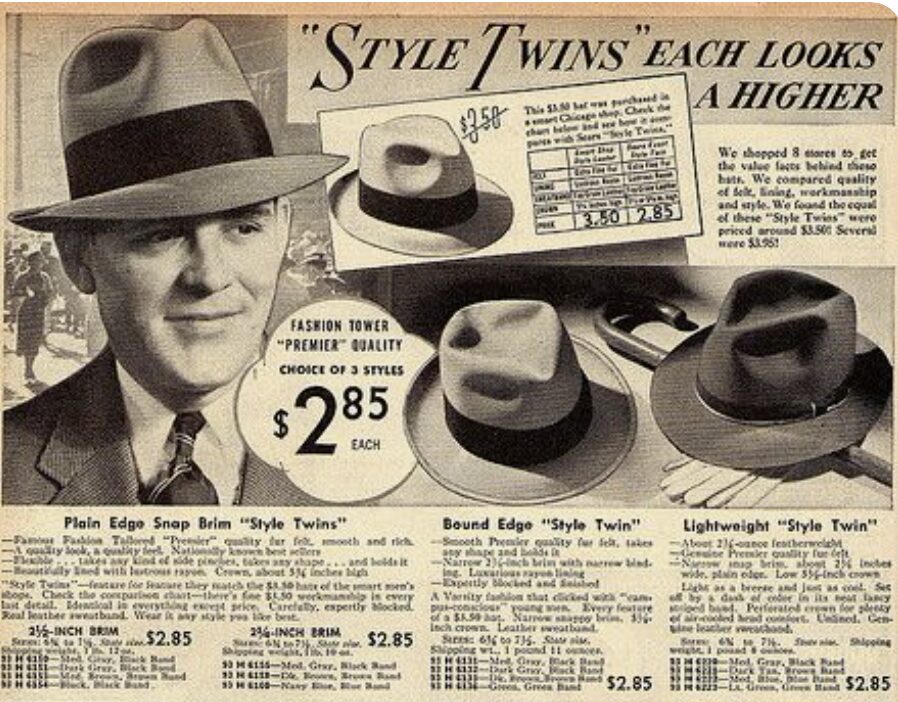
The 1940s cemented the image of the well-dressed man, with stylish hats making a statement. The fedora, with its teardrop crown and soft, shapable brim, was adored by Hollywood stars like Humphrey Bogart. The homburg, with its stiff felt, creased crown, and upper-crust aura, was favored by political heavyweights and businessmen.
The trilby, a close cousin to the fedora, had a shorter brim and taller, pointed crown. It appealed to the artistic set—jazz musicians and those who liked to march to their own beat. The pork pie, compact with a flat top and sharp little brim, found its spirit among jazz cats and youth embracing new styles.
These hats weren’t just fashioned from any old material. High-quality felt woven from rabbit or beaver fur made them durable and luxurious. A skilled hand crafted each piece, ensuring every curve and line was perfect.
From Manhattan streets to Hollywood sets, these hats became symbols. Frank Sinatra tipped his fedora with flair, while Cary Grant’s homburg demanded attention. Each style told a story, each brim and crease an accent in the symphony of a man’s ensemble.
Cultural Shift and Hat Wearing
In the 1940s, a cultural shift began to affect men’s fashion, particularly hat-wearing trends. The decade started with elegant headwear crowning the heads of suave gents, but as the post-war years unfolded, a more casual attitude emerged. Men began to unbutton their collars, loosen their ties, and gradually hang up their hats.
The younger generation was instrumental in pushing this change. They clung less to tradition and more to the allure of newfound freedoms—a sense of ease that rigid hat styles didn’t mesh with. They questioned the necessity of a hat in an increasingly warmer and centrally heated world, where their carefully combed hair could now shine without a fabric shield.
Advancing technologies like better indoor heating and cars with decent roof designs also reduced the practical need for hats. Driving with a hat became a hassle. The hatless lifestyle echoed a growing individualism, a move towards self-expression over conformity.
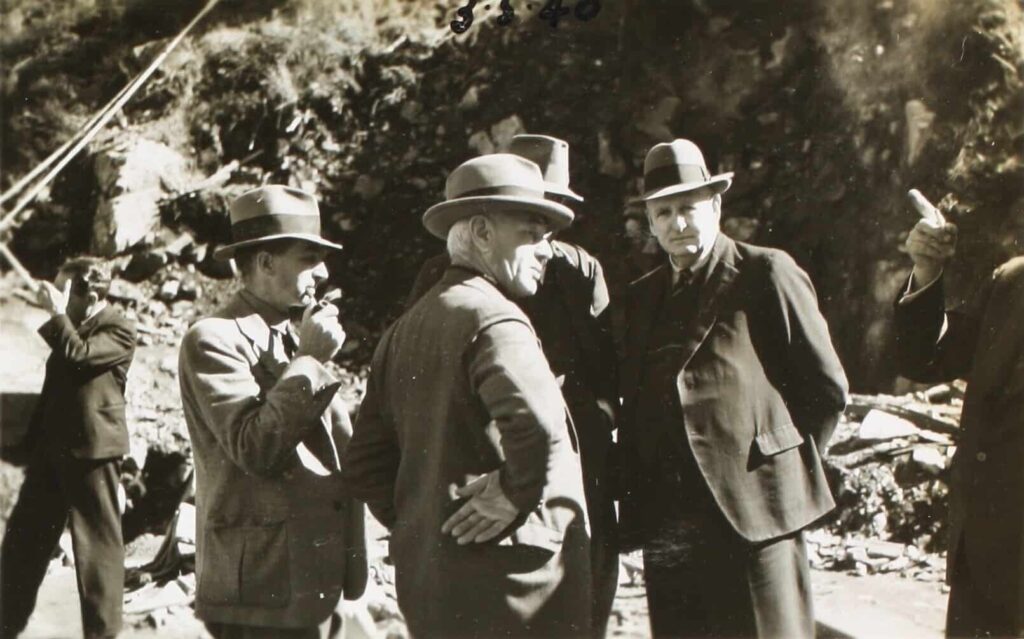
Even in this transformative period, hats tried to hold onto their place as symbols of status and elegance. Businessmen clung to their fedoras and homburgs, often misplacing them on crowded hat stands. Yet, the post-war lull brought convenience to the forefront of fashion.
This sartorial saga of the ’40s shows us that fashion trends evolve not in isolation but as reflections of broader societal shifts. As the world slowly crafted peace, individuals sought the same inner tranquility, and a hatless head often ushered in just that—a carefree, breeze-kissed experience.
Craftsmanship and Materials
Craftsmanship in 1940s men’s hats was a true art form. Skilled artisans transformed raw materials into timeless masterpieces, carefully considering every detail from brim to band. Rabbit and beaver felt were prized for their durability and luxurious texture. Rabbit felt offered both softness and strength, while beaver felt had a reputation for longevity and delicate sheen.
The hat-making process relied heavily on handwork. Hats were carefully blocked on traditional wooden forms, with shaping done by hand to ensure a perfect fit and exquisite contours. This dedication meant that no two hats were identical, each bearing the hallmark of individual craftsmanship.
Master hatters used steam to soften and mold the felt before adding final touches. The drying and stiffening processes required patience to achieve the perfect blend of form and function. Each crease and curve bore testimony to a method that made hats legendary, designed to age gracefully rather than fall prey to fleeting trends.
These hats weren’t merely accessories; they were investments, often treated better than one’s prized pair of shoes. A hat from the ’40s was built to withstand time, not just a couple of seasons. Modern hats might replicate the look, but they often lack the soul that comes from the union of exquisite materials and dedicated artisanship.
Styling and Modern Adaptations
Incorporating vintage-inspired hats into a contemporary wardrobe can be challenging, but rewarding. The trick lies in marrying the classic elegance of the ’40s with today’s fashion sensibilities. These hats, once symbols of formality, have found new life in modern stylings.
- A well-chosen fedora can elevate a basic jeans-and-tee combo to sophistication.
- For a casual day out, consider pairing a trilby with a relaxed denim jacket and sneakers.
- The key is to keep the rest of your outfit minimal and let the hat be the star of the show.
For formal wear, fedoras and homburgs styled with sharp suits serve as a confident flourish. For semi-formal gatherings, try a trilby with smart casual attire—perhaps a well-fitted blazer over a crisp shirt, minus the tie.
Choosing the right hat isn’t just about style; it’s also about face shape. For rounded faces, a hat with angles, like a fedora, can add structure. Those with more angular faces often find softer curves more flattering, allowing styles like the pork pie or homburg to lend balance.

As you step into the realm of vintage headwear, the key lies in your confidence. Whether boldly stepping out with a wide-brimmed fedora or subtly nodding to elegance with a homburg, wear your chosen piece with pride. Let it reflect your personal style—the nuanced edge that separates you from the sea of regularity.
As you consider the hats of the 1940s, remember their significance beyond mere fashion. These were symbols of an era, reflecting both personal style and broader societal changes. Wearing one today is more than a nod to history; it’s a statement of individuality and a celebration of craftsmanship that transcends time.
- Harris SJ. The bland uniformity of the dumb-looking hat. Chicago Daily News. 1944.
- Steinberg N. Hatless Jack: The President, the Fedora, and the History of American Style. Plume; 2004.
- Crane D. Fashion and Its Social Agendas: Class, Gender, and Identity in Clothing. University of Chicago Press; 2000.