
Impact of WWII on Fashion
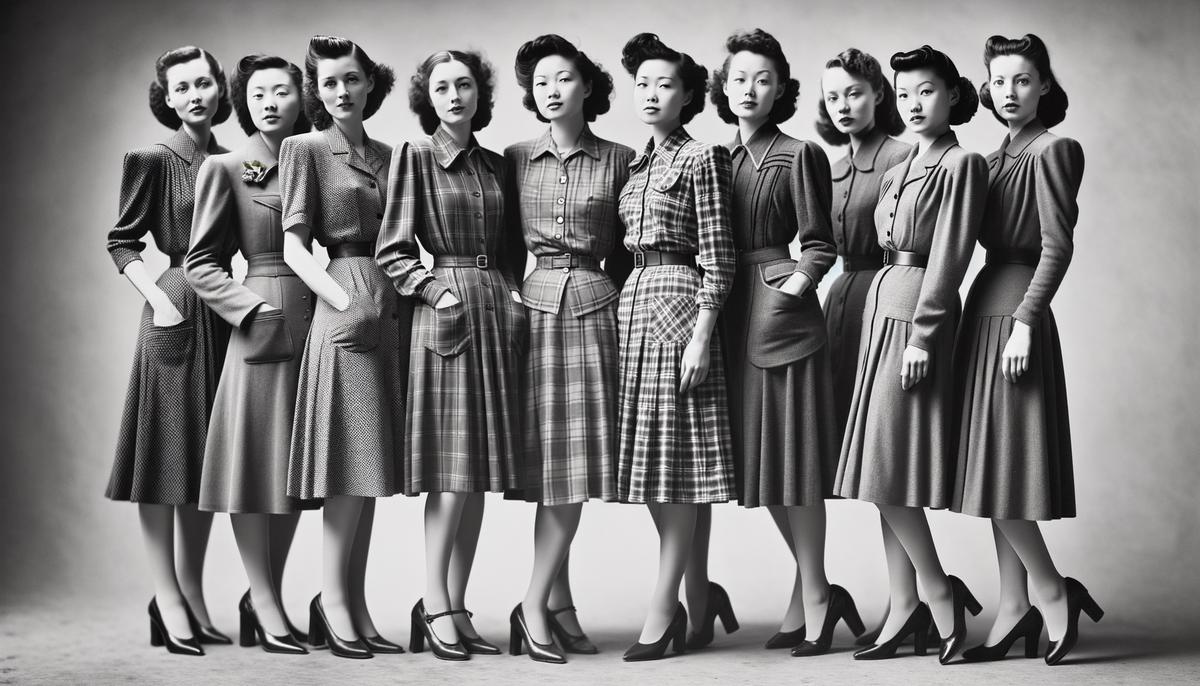
World War II transformed fashion, turning closets into metaphorical war zones. Frills and fabric-hogging skirts gave way to uniforms, Utility clothing, and practicality. Even non-military wardrobes emphasized functionality. Fashion designers worked under strict limitations, creating styles that maximized minimal materials.
Paris, the global fashion hub, was occupied, its influence diminished. Yet, creativity persevered. French designers who remained crafted restrained pieces, while across the Channel and Atlantic, rationing dictated trends. British citizens relied on precious coupons for their annual clothing needs.
Utility clothing exemplified stylish frugality. Designers like Norman Hartnell and Hardy Amies infused smart, restrained looks into austerity. Garments featured:
- Square shoulders
- Short skirts
- Minimal fabric usage
- Limited buttons and trimmings
The British Civilian Clothing Order of 1942 even enlisted celebrities to design Utility garments.
Rationing affected all aspects of clothing production. Elaborate trimmings and pleats were eliminated. Innovative materials often resembled parachute silk or blackout curtains. Shoes with cork and other creative soles replaced leather footwear.
Knitting became a heroic household activity as people repurposed available yarn. Women's magazines guided readers in crafting wearable art from everyday remnants. Old socks became mittens, and discarded trousers transformed into stylish skirts.
Children's clothing mirrored adult trends, adapted for growth spurts within rationing constraints. Mothers crafted colorful cotton dresses for girls, while boys wore practical knitted pullovers and shorts.
This period, when pillowcases doubled as summer fashion and gravy substituted for leg tans, speaks to adaptation and hardship transformed into art. The 1940s fashion revolution, shaped by circumstances and constraints, remains paradoxically timeless.
The Rise of American Fashion
As Europe grappled with war-induced austerity, American designers seized their moment, breaking free from Parisian influence. Claire McCardell and Norman Norell emerged as pioneers of a distinct American style, blending innovation with necessity and laying the foundation for mid-century sportswear.
McCardell created pieces that celebrated freedom and function. Her "Popover" dress exemplified this—simple, chic, and versatile, even including an oven mitt. This was fashion designed for life's various adventures, from park strolls to kitchen duties.
Norman Norell filled the void left by French couturiers with elegant yet straightforward designs. He used sequins sparingly to add glamour to the somber wartime atmosphere.
Hollywood's allure brought American designs to movie screens, embedding them in cultural consciousness. Stars like Katharine Hepburn popularized pants, introducing a liberating sartorial choice to everyday wardrobes.
This emerging American style prioritized practicality over excess. It meant revolutionizing garments with:
- Stretchy jersey fabric
- Durable denim
- Casual, sporty silhouettes
While European fashion faced wartime challenges, the American fashion scene advanced, adapting to a country in transition. Clothes became symbols of resilience, innovation, and sometimes defiance against global constraints. The U.S. didn't just adjust; it thrived, embodying a casual elegance that continues to resonate today.

Christian Dior's New Look
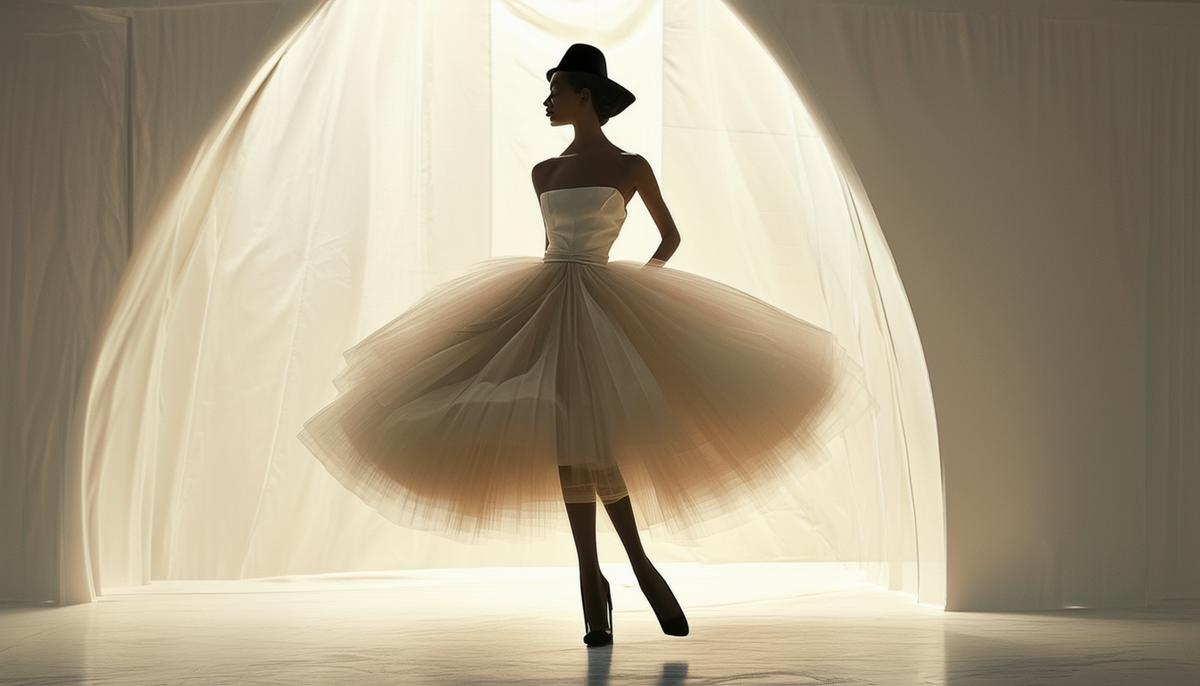
Christian Dior's New Look in 1947 swept away wartime austerity. More than just fashion, it redefined dressing itself. Dior's debut "Corolle" collection emerged in a world craving beauty and extravagance. Noticeably feminine, it featured:
- Rounded shoulders
- Cinched waists
- Voluminous skirts below the knee
This style echoed pre-war elegance, boldly rejecting 1940s thriftiness by using yards of material per piece—an unapologetic celebration of abundance after years of restriction.
Reactions varied widely. Some women saw the New Look as a godsend, a return to adornment and femininity. Others, especially in regions still facing shortages, scorned it as frivolous and unpatriotic. Nonetheless, the style captivated the fashion world, bridging scarcity and splendor. It reestablished Paris as the haute couture epicenter.
"The New Look was in fact not new at all, but simply an exaggeration of late 1930s and Occupation styles, yet it was the very antithesis of the clothing produced in both the UK and the United States during the war."
Even Princesses Elizabeth and Margaret embraced Dior's designs despite governmental disapproval. This gesture signified more than fashion; it reclaimed a spirit—an unleashing of fabric and form echoing peacetime's return.
The New Look invited a recovering world to dream again and delight in dressing up. It paved the way for reimagining style globally as the desire for beauty and individual expression resurfaced.
Cultural Icons and Fashion Trends
Katharine Hepburn became a transformative force in 1940s fashion. In an era dominated by wartime pragmatism and Utility clothing, Hepburn boldly brought a sartorial revolution. Her effortlessly chic style made her an influential cultural icon, signaling a shift that resonated beyond the silver screen.
Her preference for trousers, typically reserved for men, was both a daring fashion statement and cultural declaration. While skirts and dresses were the norm, Hepburn's high-waisted slacks challenged conventions, carving space for the modern woman who valued comfort and flair.
Hollywood embraced this new aesthetic, inspiring audiences seeking fresh ideas. Hepburn represented an escape from tight corsets and voluminous skirts. Countless women found validation in her fearless fashion choices, realizing elegance could harmonize with practicality.
This shift went beyond adding trousers to wardrobes; it was transformative. Hepburn's style exuded casual sophistication, perfectly capturing the evolving American look. Alongside her trademark pants were crisp button-down shirts marrying utility with chic appeal.
Hepburn's influence extended beyond films. Her practical approach resonated nationwide, fueling a fashion dialogue embracing sporty freedom. She championed a movement celebrating individuality, inspiring generations to express unique identities through style.
Other screen legends joined Hepburn in this fashion revolution. Stars like Rita Hayworth and Lauren Bacall also personified new trends, from dramatic silhouettes to relaxed luxury. Their on-screen wardrobes left lasting impressions, setting aspirational standards for audiences craving post-war glamour.
Throughout the 1940s, Hollywood and its stars shaped society's fabric, introducing not just new clothes but renewed identities. The American look they cultivated—rooted in simplicity, functionality, and undeniable allure—bridged life on and off-screen.

Post-War Fashion Transition
As World War II ended, the world looked eagerly to the future—even in fashion. Yet, moving beyond wartime Utility clothing wasn't straightforward. The shift from economical ensembles to elaborate designs mirrored a dance of hope and lingering shortages.
Fashion constraints were loosening, but material scarcities still challenged designers and consumers. In the UK, clothing rationing persisted until 1949, echoing austerity's stubborn grip despite the war's end.
With time and some fabric to spare, fashion gradually unfurled. French couturiers opened doors to an embellished future with Christian Dior's New Look. It introduced voluminous skirts and cinched waists to those yearning for fabric's luxurious embrace.
This sartorial evolution transcended aesthetics; it was about expression, freedom, and reclaiming identity. Wartime's drab tones gave way to vibrant hues. As factories resumed textile production for fashion, the style-starved public eagerly embraced these new offerings.
This glamour brought unique challenges. Shoppers—adept at "make do and mend"—now faced the exciting dilemma of choosing new styles without immediate means to acquire them. It was a gradual return to a world where fashion wasn't bound by coupons and careful calculations.
The post-war 1940s demonstrated humanity's ability to rebuild and redefine. Weaving wartime experiences with newfound creativity, designers across Europe and America revitalized wardrobes everywhere. There was demand for diversity and boldness, for clothing that balanced fashion's capricious nature with lingering practicality.
Rationing's end signaled not just a return to fabric abundance, but a wealth of possibilities. People found joy in wearing something decorative yet functional. As decades passed, fashion would remember how resilience stitched itself into every hem and persisted into peacetime's stylish parade.

Fashion during and after World War II wasn't just about clothing; it exemplified resilience and creativity amid adversity. As the world shifted from wartime scarcity to peacetime abundance, fashion reflected both challenges and triumphs. This period reminds us that style encompasses more than fabric and design; it embodies the stories and emotions in every stitch.
- Ewing E. History of 20th Century Fashion. London: Batsford; 1974.
- Laver J. Costume and Fashion: A Concise History. London: Thames & Hudson; 1995.
- Shrimpton J. Fashion in the 1940s. London: Shire Publications; 2014.
- Blodgett B. The History of Claire McCardell's Popover Dress. Seamwork Magazine. 2015.
- Henderson A. How Katharine Hepburn Became a Fashion Icon. Smithsonian Magazine. 2013.
- Gregory A. A Brief History of the Zoot Suit. Smithsonian Magazine. 2016.
- Summers J. Fashion on the Ration: Style in the Second World War. London: Profile Books; 2015.