
In the 1940s, fashion exemplified resilience and creativity, shaped by wartime scarcity. Women found innovative ways to maintain elegance and style, even as materials were rationed for the war effort. This era wasn’t just about adapting; it was about transforming limitations into opportunities for self-expression.
1. The Rise of Nylon Stockings
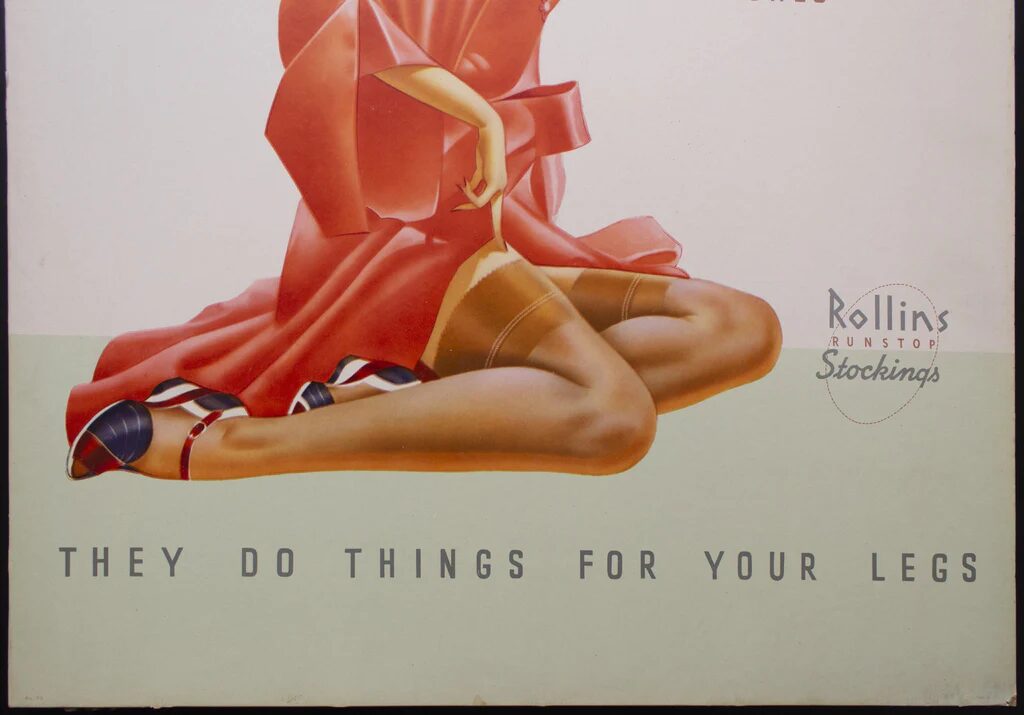
Nylon stockings revolutionized 1940s fashion. Introduced at the 1939 World Fair by DuPont scientist Wallace H. Carothers, these synthetic stockings quickly became a must-have item. They created sleek leg lines under rising hemlines, capturing the imagination of women everywhere.
During the war, nylon was redirected for military use, making stockings scarce and coveted. Women improvised with gravy browning or coffee to mimic nylon’s look, even drawing a seam for authenticity. Post-war, the return of nylons sparked “nylon riots” – frantic shopping sprees as women sought to reclaim this luxurious touch.
Nylon stockings showcased both technological advancement and the resourcefulness of wartime culture, blending practicality with style.
2. Seams and Style
Seamed stockings were a style revolution in 1940s fashion. These vertical lines created an optical illusion, making women’s legs appear longer and slimmer. Even with the emergence of seamless stockings in the 1930s, the appeal of the seam endured.
During wartime scarcity, women’s commitment to this look became iconic. They began drawing seams onto their bare legs with eyebrow pencils, maintaining elegance despite challenging circumstances. This act became almost ritualistic, ensuring the silhouette of sophistication remained intact.
The seamed stocking was more than just a garment; it was an emblem of identity and a nod to elegance amid wartime austerity. In the post-war years, as nylon production resumed, the demand for authentic seamed nylons surged, reaffirming their status as a timeless classic.
3. The Stocking Shortage
During World War II, nylon stockings became scarce as nylon was diverted to support the war effort. This shortage sparked a wave of creativity among women determined to maintain their style.
“Liquid stockings” became popular, with women transforming their legs into faux hosiery masterpieces. Using foundation-like products, sometimes even coffee or gravy browning, they coated their legs in the desired beige hue. The finishing touch was drawing on the crucial seam with an eyebrow pencil.
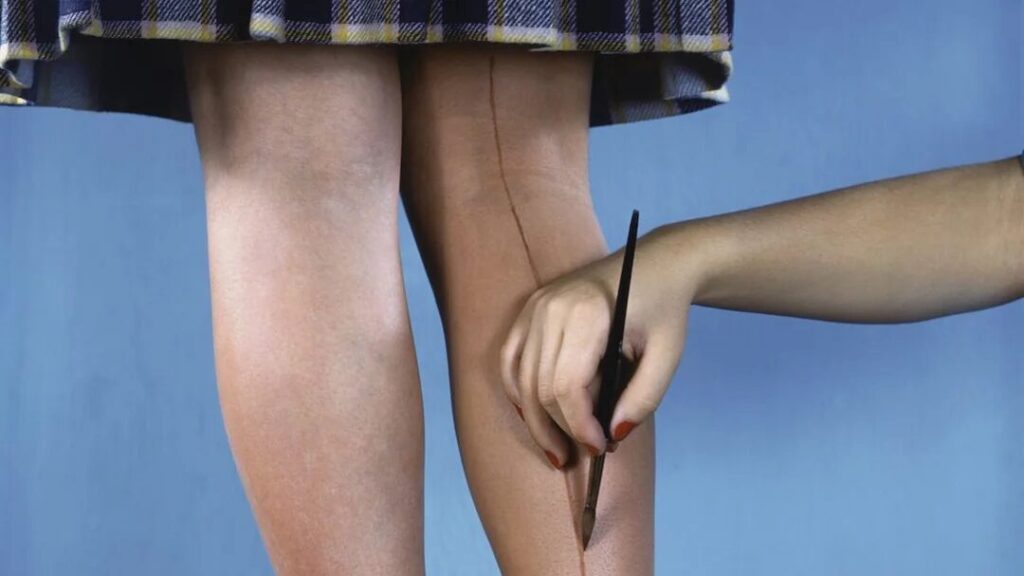
This DIY ingenuity wasn’t just about mimicking nylon; it was a bold declaration of resilience. Women were determined to maintain their style despite shortages, making ‘liquid stockings’ a statement of perseverance and adaptability. Makeup bars even began offering this service, turning department stores into havens of wartime beauty innovation.
4. Pinup Queen: Betty Grable
Betty Grable, the ultimate pinup queen of the 1940s, epitomized glamor with her charm and iconic legs, famously insured for a million dollars. At Grauman’s Chinese Theater, she immortalized not her signature, but a sketch of her legs, cementing their status as a national treasure.
During World War II, Grable’s image became a morale booster for troops. Her pinup poster, tucked away in soldiers’ foot lockers, was more than just a pretty face; it was a symbol of hope and a reminder of home. Her famous “over-the-shoulder” pose decorated countless barracks walls.

Grable’s influence extended beyond the military, resonating through fashion and everyday culture. She became emblematic of the era’s ideal of femininity, an elegance that women aspired to emulate even amidst resource rationing. Her impact endures, cementing her legacy not only as a beloved actress but as a cultural icon who helped define a pivotal decade.
5. The Pinup Phenomenon
In 1940s culture, pinup images became powerful symbols of hope and connection. Featuring starlets like Rita Hayworth and Veronica Lake, these portraits embodied a blend of charm and confidence that resonated deeply with the public.
For servicemen, pinups were more than aesthetic delights; they were reminders of home and normalcy. Back on the home front, women drew inspiration from these images, finding ways to incorporate the pinup aesthetic into their own lives despite wartime rationing.
The pinup phenomenon gracefully balanced fantasy and reality, capturing the era’s hopeful spirit while elevating its fashion sensibilities. It encouraged creativity in everyday wardrobes, allowing women to channel a touch of Hollywood glamor into their daily lives.
Even today, the influence of 1940s pinup art is felt, appreciated by those who admire a classic, confident style where every seam and pose tells a vibrant story of its own.
6. Wartime Fashion Challenges
The scarcity of materials during World War II forced women to rethink their wardrobes, sparking creativity and ingenuity in fashion. With wool, silk, and nylon redirected to the war effort, women adapted with resourcefulness and style.
Utility clothing became both practical and symbolic, designed for efficiency while maintaining a certain elegance. Women embraced simplicity, finding charm in well-crafted buttons or neat tucks that added sophistication to rationed garments.
The “Make Do and Mend” philosophy flourished, with women sewing patches or transforming old dresses into new ones. Homemade clothing boomed, often using unexpected resources like men’s shirts or curtains. Accessories like hats and gloves gained new significance, adding flair without exceeding material constraints.

Even in wartime, the pursuit of beauty continued. Lipstick became a potent morale booster, with bold reds showing solidarity and lifting spirits. This era proved that fashion could reflect and elevate culture, regardless of circumstances, celebrating tenacity through style and practicality with a touch of enchantment.
The enduring legacy of 1940s fashion lies in its blend of resourcefulness and elegance. It serves as a reminder that even in challenging times, style can be both a form of personal expression and a source of optimism.
- Spivack E. Stocking Series. Smithsonian Magazine. 2012.
- Held IM. Hagley History Hangout: Nylon and Women’s Lives in the 20th Century. Hagley Museum and Library. 2021.
- DuPont Company. 50th Anniversary of Nylon Press Releases. DuPont Archives. 1988.