
Board games from the 1940s offer a glimpse into the social and cultural landscape of the time. As families gathered around their tables, these games became more than just entertainment; they reflected the hopes, challenges, and dreams of a world in transition. From the strategic maneuvers of Risk to the wordplay of Scrabble, each game carried with it a piece of history, inviting players to engage with the world around them in new ways.
Popular Board Games of the 1940s
Board games in the 1940s were a peek into the era's culture and social life. During this time, families gathered around the living room table, eager to engage in friendly competition. Monopoly ruled the roost, serving up a slice of 1940s reality—an America recovering from the Great Depression, progressing through wartime economies, and dreaming of financial stability.
Clue, released in 1949, mirrored the mystery and suspense genres that gripped the nation. This game was like a mini Agatha Christie novel, letting players become amateur sleuths in their living rooms.
Scrabble encouraged creativity and expanded vocabulary, reflecting an intellectual curiosity prevalent in that era. With letters sprawled across the board, players discovered new words, possibly feeling a thrill when managing to use "Z" on a triple word score.
Risk, introduced at the tail end of the 1940s, brought strategic global conquest into the mix. The game reflected geopolitical tensions and global awareness following World War II.
Candy Land, aimed towards young ones, hit the shelves by the mid-1940s. Its sweet treats and vibrant paths represented an escape from the era's challenges—offering a brief, sugary detour from reality for children.
The variety of games on offer encapsulated a diverse range of emotions and experiences of the time. Board games of the 1940s weren't just trivial pursuits; they were social artifacts, painted with the colors of their times, transmitting more than just family fun but slices of cultural change and economic aspiration.
Cultural Reflections in 1940s Board Games
In the 1940s, board games were windows into the cultural and societal norms of the time. Family values were at the heart of the board gaming experience, reinforcing unity—a post-war celebration of togetherness. Games like Life promoted embracing key milestones, echoing the broader societal desires for stability and success after the turbulence of war.
Gender roles were subtly woven into these games, often mirroring and reinforcing the expected norms of the era. In a period of rapid socio-economic change, board games offered players both a reflection and reinforcement of traditional roles even as the world slowly began to redefine them.
World War II's impact could be felt across the game board spectrum. Whether it was strategizing in Risk or handling a Depression-reminiscent Monopoly, echoes of global conflict and economic struggles were laced into the gameplay itself. Yet, games also presented escapist fantasies, showing a moving away from the hard-hitting facts of daily life.
The surge in communication and travel during and after the war broadened the themes explored in games. There was a newfound appreciation for global awareness and differing cultures, albeit in simplified game mechanics. It fostered a curiosity for the world beyond one's own borders, hinted at by the strategic maneuverings in Risk or the excitement of exploring new territories.
In these ways, board games served as cultural artifacts, giving us insights into how people of the 1940s coped, dreamed, and imagined new futures.
Evolution of Board Game Design in the 1940s
The evolution of board game design in the 1940s reflects a period of creativity and innovation. Game designers were crafting interactive experiences that mirrored a rapidly changing world.
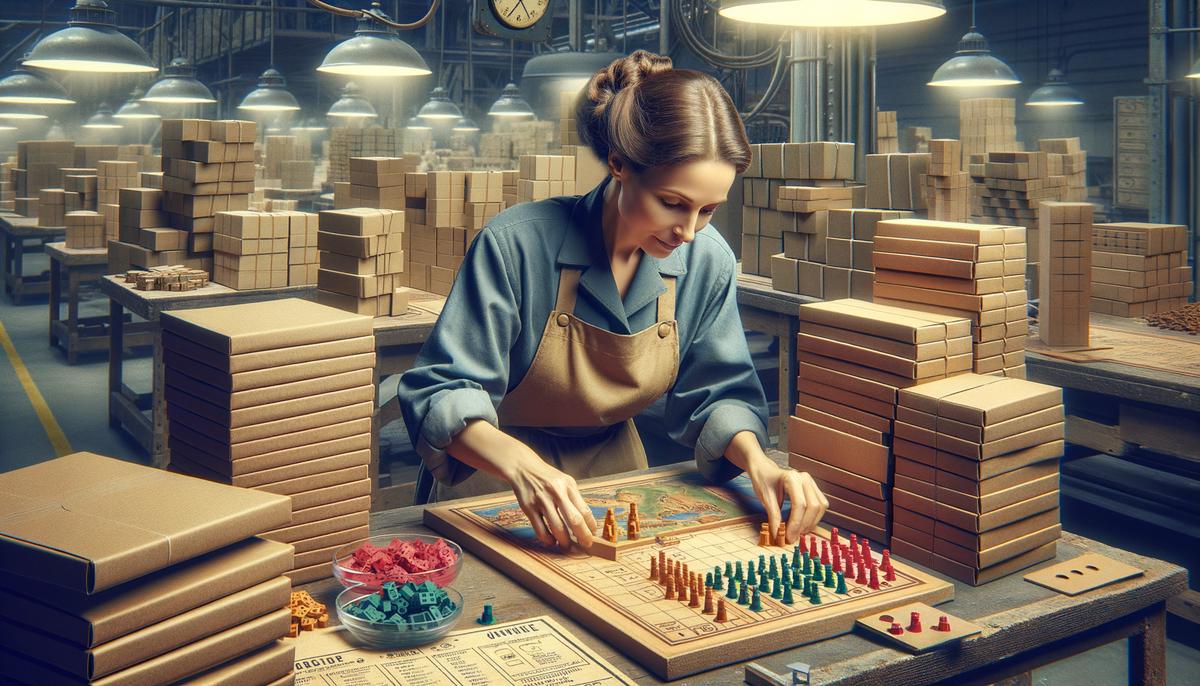
War efforts necessitated resourcefulness, prompting a shift from metal and hardwood components to more abundant materials, like cardboard and plastic. Imagine a Risk board with carefully crafted cardboard continents or a Clue board that set the stage for a theatrical who-dun-it using only paper and ink.
Advancements in printing technology propelled board game aesthetics forward. Vivid colors and detailed illustrations brought games to life in new ways. Full-color boards invited players to step into different worlds, fueling imaginations that had gone hungry for distraction amid serious global events.
Game mechanics began hinting at complex stories. Designers experimented with layered, multifaceted plots that would eventually bloom into the intricate, immersive games we cherish today. Even a modest dose of mystery or strategy was a revelation in the '40s.
Distribution shifted too. Board games went from being niche market items to household staples—encouraged by the growing middle class eager for family-friendly entertainment. Department stores started dedicating entire sections to games, a testament to their growing popularity.
Throughout it all, board games of the 1940s spun threads of comfort, innovation, and anticipation into each piece. They were lively capsules of a transformational era, embodying that post-war optimism, offering players an engaging escape while gently nudging them into the modern world, one play at a time.

Impact of World War II on Board Games
World War II had a profound impact on board games, influencing the industry in unexpected and lasting ways. Wartime shortages and shifting cultural landscapes affected the themes, production, and marketing of board games.
In terms of production, the war demanded much of the world's metal and wood resources. Game manufacturers had to pivot quickly, embracing alternatives like cardboard and plastic. This necessity-driven ingenuity led to a creative renaissance, with designers exploring new ways to make their games visually appealing and engaging while constrained by the scarcity of traditional materials.
This period encouraged game makers to explore deeper thematic possibilities. Wartime games often leaned into strategy and military themes, tapping into the real-world events that were saturating public consciousness. The thrill of outmaneuvering an opponent on the game board subtly echoed the global chess match that was unfolding beyond players' doors.
Marketing underwent a wartime transformation. With families longing for wholesome entertainment, board games were marketed as family-friendly escapes. Advertisements and packaging appealed to the era's sensibilities, invoking camaraderie, togetherness, and even patriotic undertones.
World War II also influenced the global game market's landscape. With international shipping curtailed by war efforts, local production became vital, leading to regional variations of some popular games as countries adjusted games to fit their cultural experiences.
In essence, the war created an atmosphere that called for innovation. Despite the challenges, manufacturers succeeded in capturing the spirit of the time, delivering games that were not only entertaining but mentally engaging. These games weren't just time-fillers; they were moments of joy and distraction, providing that much-needed levity with every roll of the dice.
Board games of the 1940s served as both mirrors and windows—reflecting the era's realities while offering a view into imagined futures. They were more than just pastimes; they were vessels of hope and imagination, reminding us that even in challenging times, a simple roll of the dice could bring joy and connection.
- Pilon M. The Monopolists: Obsession, Fury, and the Scandal Behind the World's Favorite Board Game. Bloomsbury Publishing; 2015.
- Parlett D. The Oxford History of Board Games. Oxford University Press; 1999.