
Origins and Evolution of Diners
Walter Scott's lunch wagon idea in 1872 kickstarted the American diner scene. These horse-drawn snack stops initially parked near newspaper offices, serving quick bites to city workers. Unpretentious and often just trailers or converted train cars, they became a familiar part of the urban landscape.
By the 1920s, diners were setting down roots. Prefabricated structures replaced mobile lunch wagons, embracing the vibrant spirit of Art Deco. Eating out became an experience, with gleaming chrome and neon lights.
During the Great Depression, diners offered affordable comfort food, keeping spirits up when times were tough. A typical menu might include:
- Meatloaf
- Burgers
- Pancakes
The post-WWII era brought renewed energy to diners. As soldiers returned and the economy improved, diners became retreats for everyday people. Families gathered in booths, enjoying meals at all hours. Menus expanded, offering a wide variety of options.
Diner chains also emerged, while some independent diners maintained their unique character. The Pig diner near L.A., for instance, served food in a pig-shaped building.
By the late 40s, diners had evolved into social hubs where people could share stories and smiles over a cup of coffee. They began adapting to serve a new generation, balancing nostalgia with modern amenities.

Impact of World War II on Diners
As World War II ended, America entered a period of optimism and economic growth. Diners, which had weathered wars and economic upheavals, were ready to welcome this change. Once a refuge for working folks, diners now invited a broader crowd to enjoy life's simpler pleasures.
The 1940s saw diners evolve from utilitarian food wagons into vibrant social hubs. Families, with more disposable income, sought out diners not just for meals but for an experience. Diners adapted by adding family-friendly booths and expanding their menus to cater to diverse tastes.
Technological advances improved the dining experience:
- Air conditioning made interiors more comfortable
- Jukeboxes added a soundtrack to meals
- Formica tables and vinyl booths provided tactile pleasures
- Chrome-plated façades enhanced visual appeal
What made diners truly special was their adaptability and inclusivity. They became spaces where every layer of society could mingle, sharing stories over a cheeseburger or debating current events. Diners had transformed into democratic spaces, reflecting the heartbeat of post-war America.

Design and Menu Innovations
In the 1940s, diners became showcases for design flair and culinary creativity. The Art Deco aesthetic brought sweeping curves and sleek lines, with chrome and stainless steel giving diners a modern look. Walls might feature murals or etched glass panels, while neon signs made diners standout attractions after dark.
The menu evolution kept pace with the design changes. Diners expanded beyond basic fare to offer a broader range of comfort foods. Blue plate specials appeared, offering variety to regular patrons. Pie options multiplied, from lemon meringue to shoofly, reflecting regional tastes and the creativity of diner cooks.
Ultimately, diners in the '40s became stages for everyday life. They aimed not just to feed but to delight patrons, giving them reasons to:
- Drop in for a meal
- Stay for the atmosphere
- Return for that sense of belonging
Even on off days, the combination of stylish decor and eclectic menus kept America coming back for more.
Cultural and Social Role of Diners
Diners in the 1940s were more than just places to eat; they were vibrant community hubs. In an era marked by post-war recovery, diners offered a warm refuge where people from all walks of life could gather.
The inclusive nature of diners was one of their most appealing qualities. Executives sat alongside factory workers, while students shared booths with returning servicemen. This diversity was reflected in the menus, which catered to various tastes and budgets.
"Diners encapsulated the promise of an America where every voice mattered."
Diners served as informal stages for storytelling and debate. Conversations ranged from local gossip to global affairs, all accompanied by the sounds of clinking cutlery and jukebox tunes. The affordable menus made dining out accessible to many, further enhancing the democratic atmosphere.
Perhaps the true magic of diners lay in their ability to create connections. Shared laughter over milkshakes or collective groans over a team's loss contributed to a deeper sense of community. In a time of societal changes, diners reminded patrons that despite differences, common experiences could bring people together.
Diners showed that over a simple meal, connections could be forged and understanding could grow, creating a rich tapestry of shared experiences that defined the era.
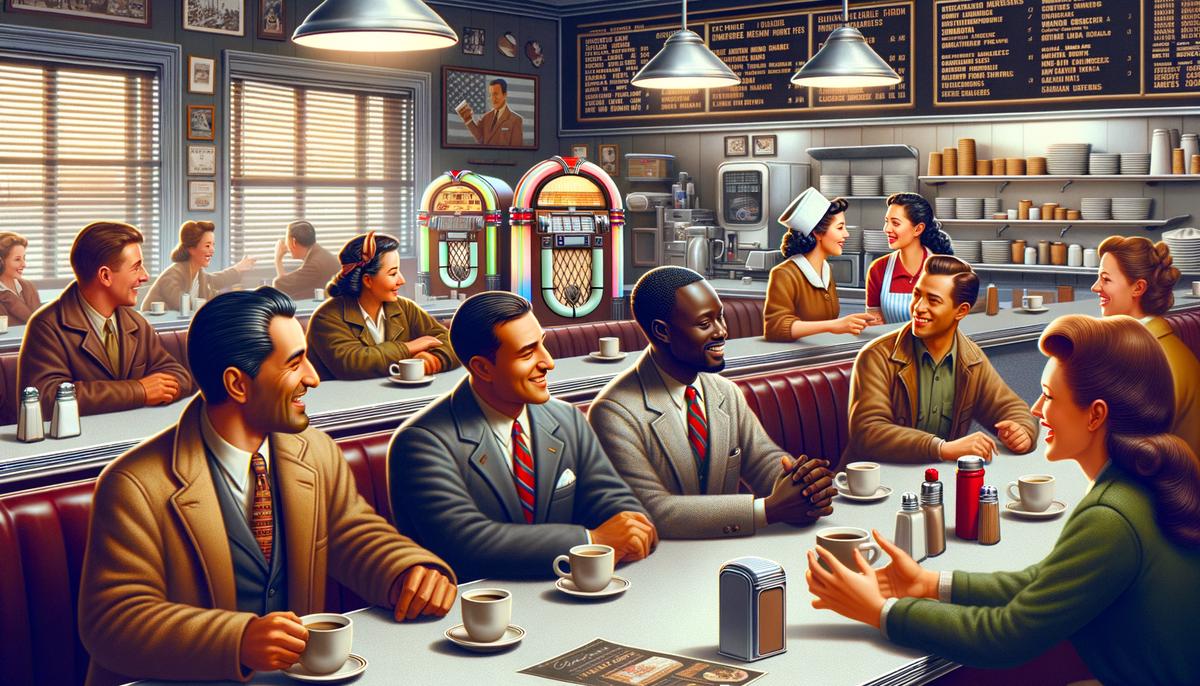
In American culture, diners stand as a testament to shared experiences and community spirit. They remind us that, over a simple meal, connections are forged and stories unfold, creating a mosaic of human interaction that is both timeless and cherished.
- Witzel MK. The American Diner. MBI Publishing Company; 1999.
- Gutman R. American Diner Then and Now. Johns Hopkins University Press; 2000.
- Hurley A. From Hash House to Family Restaurant: The Transformation of the Diner and Post-World War II Consumer Culture. The Journal of American History. 1997;83(4):1282-1308.